Cladding Case Law – Almacantar: Court of Appeal Judgement
The Court of Appeal has dismissed Almacantar’s appeal over the recovery of façade replacement costs at Centre Point House. Its judgment confirms that the Building Safety Act 2022 can protect qualifying leaseholders from cladding remediation charges even where the defects date from before June 1992 and the danger involves falling façade components rather than fire.
In Almacantar Centre Point Nominee No.1 Limited and another v Penelope Claire de Valk and others [2026] EWCA Civ 1466, the Court unanimously upheld the decisions of the First-tier Tribunal and Upper Tribunal. The proposed works are expected to cost more than £12 million, including VAT and professional fees.
This Cladding Case Law – Almacantar update examines the judgment and its implications for building owners, managing agents, leaseholders and professionals assessing external wall systems.
The decision makes the evidence about a building’s construction, condition and proposed repairs particularly important. It also leaves an important question about the treatment of some curtain wall systems for a future case.
What did the Court of Appeal decide?
The judgment, handed down on 17 November 2026, confirms that:
- Paragraph 8 of Schedule 8 operates independently of the statutory definition of a “relevant defect”. Its protection can therefore extend to unsafe cladding defects dating from before 28 June 1992.
- “Unsafe” includes dangers beyond fire. A risk of façade components falling can bring a cladding system within the protection.
- Identifying a cladding system requires a detailed assessment of the building. The specialist tribunal was entitled to reach its conclusions from the technical evidence.
- Retaining some existing components does not prevent works from amounting to cladding remediation. The Centre Point House scheme involved removing and replacing substantial parts of the existing system.
- The Court did not decide whether a cladding system comprising the whole external wall system falls within paragraph 8. That question remains open.
The result preserves the protection for the 13 respondents, each of whom held a qualifying lease. The statutory tests still matter: the judgment does not exempt every leaseholder from every façade repair charge.
Why did Centre Point House need remedial works?
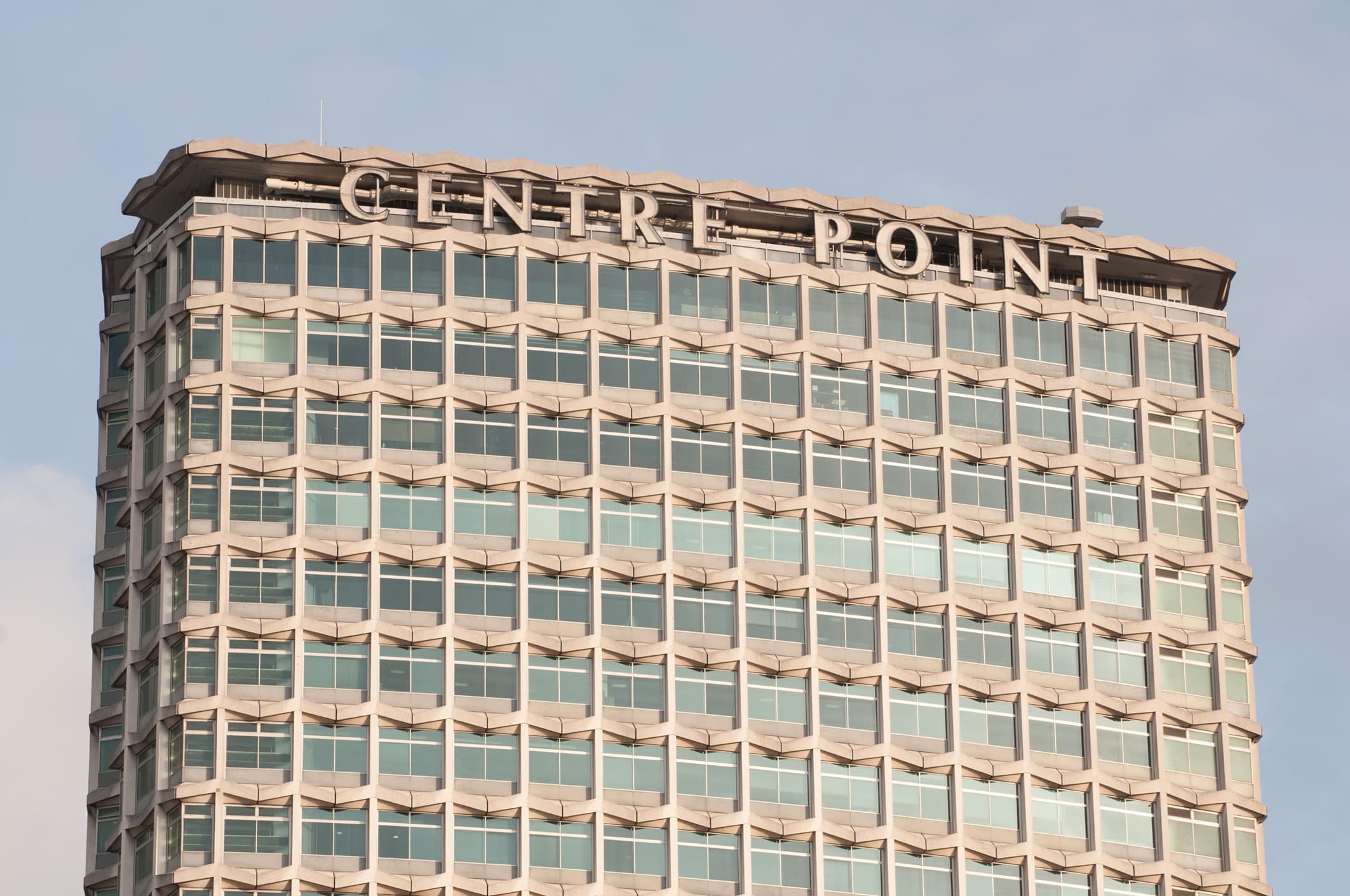
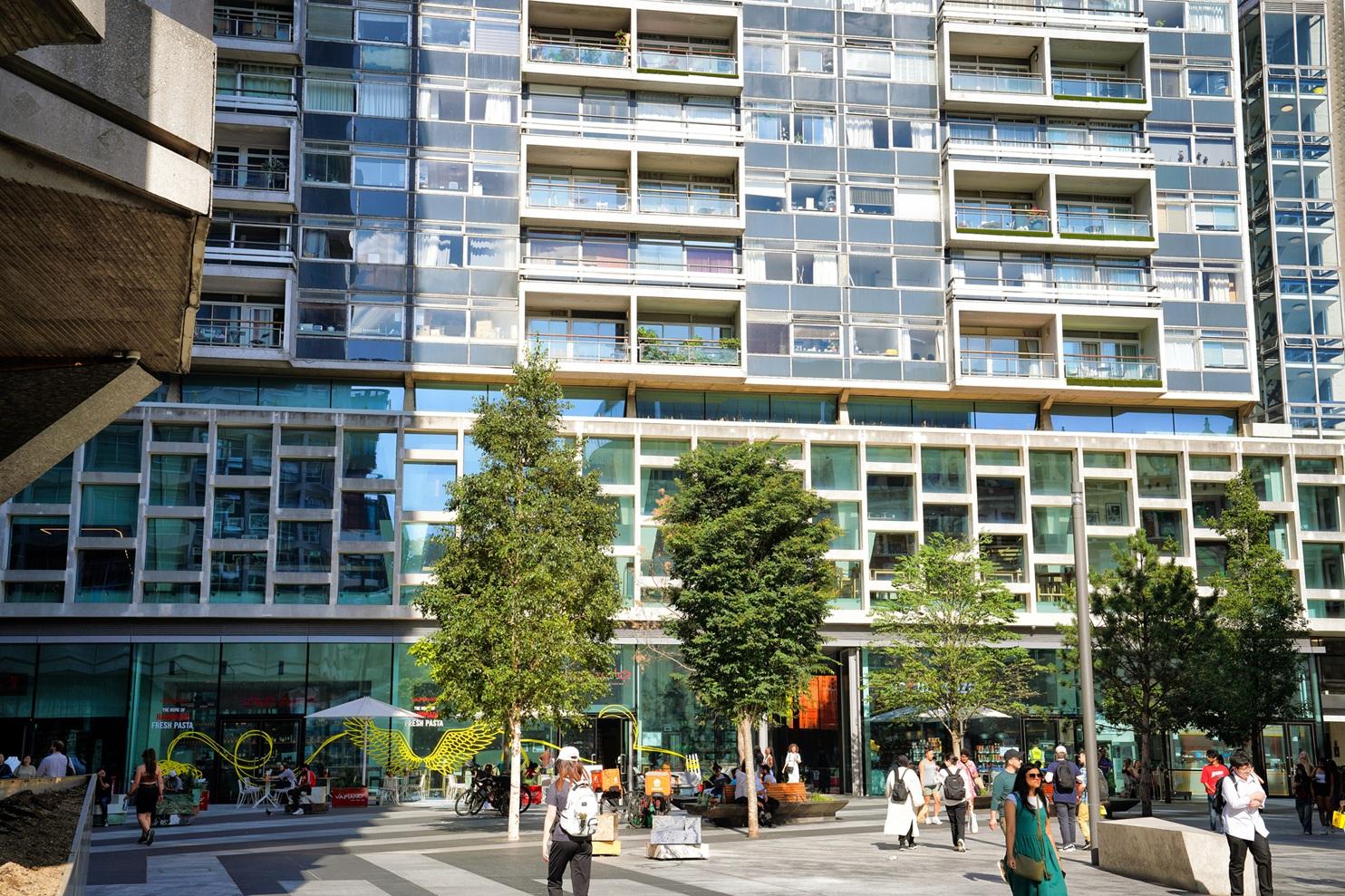
Centre Point House forms part of the 1960s Centre Point development in central London. Above its commercial accommodation sits a six-storey residential podium containing 36 duplex flats.
The dispute concerned this residential podium, which the judgment calls “CPH”.
Its east and west façades use an unusual system of timber framing, glazing, windows and opaque glass spandrel panels. Water ingress and trapped moisture caused the timber to deteriorate and rot. The First-tier Tribunal found that the façade had been inherently defective from completion and had deteriorated over time.
The consequences extended beyond water penetration. Parts of the timber frame could no longer safely support the glazing and panels. Frame joints had opened or failed, and an opening window panel had already detached and fallen onto the podium above the commercial units.
The experts considered the façades dangerous and agreed that urgent works were necessary.
The proposed scheme would remove the glazing, windows, spandrel panels, insulation, fixings and the front portion of the timber frame. A new steel frame, attached to the building’s main concrete structure, would support replacement glazing and panels. Some existing timber would remain, but it would no longer perform its previous supporting role.
The façade experts agreed that the scheme offered the best, and realistically only, solution. The central dispute concerned whether Almacantar could recover its cost through service charges.
How did the dispute reach the Court of Appeal?
In January 2023, the freeholders applied to the First-tier Tribunal under section 27A(3) of the Landlord and Tenant Act 1985. They sought a determination of whether service charges would be payable for the proposed scheme and, if so, by whom.
The tribunal found that the works fell within the landlords’ repairing covenants. In principle, the leases therefore provided a basis for recovering the costs.
However, it also found that paragraph 8 of Schedule 8 to the Building Safety Act prevented recovery from leaseholders with qualifying leases. It concluded that only the flats without qualifying leases would attract liability for the costs under its determination.
The Upper Tribunal dismissed the freeholders’ appeal in September 2025. Almacantar then advanced five grounds before the Court of Appeal, challenging the application of paragraph 8 and the classification of the façade and proposed works.
Lord Justice Newey and Lord Justice Fancourt delivered a joint judgment. Lord Justice Miles agreed. All five grounds failed.
The statutory protection: paragraph 8 of Schedule 8
Paragraph 8 begins with a direct prohibition:
“No service charge is payable under a qualifying lease in respect of cladding remediation.”
It then defines cladding remediation by reference to the removal or replacement of any part of an unsafe cladding system forming the outer wall of an external wall system.
The appeal tested the boundaries of that definition.
Several neighbouring provisions in Schedule 8 expressly depend on a “relevant defect”. Section 120 defines that term by reference to qualifying works, a statutory period and a building safety risk arising from fire spread or collapse.
Almacantar argued that paragraph 8 should carry the same restriction, despite omitting the expression itself.
The Court rejected that interpretation.
1. Cladding remediation protection can cover defects predating June 1992
The first major issue concerned the age of the defects.
The statutory relevant period for the original construction or refurbishment works runs for 30 years ending on 28 June 2022. Centre Point House’s original defective construction predated that period.
Almacantar argued that this placed the proposed scheme outside paragraph 8. It relied on the wider statutory context, including sections 116 and 122, which describe protections relating to relevant defects.
The Court placed decisive weight on the wording Parliament used.
Unlike paragraphs 2–7 and 9 of Schedule 8, paragraph 8 does not refer to relevant defects. It instead imposes its own requirements, including that the cladding system must be unsafe. The Court considered that difference significant.
Sections 116 and 122 introduce the statutory scheme; they do not restrict the clear terms of Schedule 8. The Court also rejected the suggestion that it should correct paragraph 8 as a drafting error. The necessary basis for judicial correction did not exist.
The practical consequence is clear: the age of an original cladding defect does not, by itself, defeat paragraph 8 protection.
For older residential buildings, owners and advisers should therefore assess the cladding protection separately from the relevant-defect provisions. A conclusion that a defect predates June 1992 cannot end the service charge analysis.
2. Unsafe cladding includes dangers beyond fire
Almacantar also argued that “unsafe” should mean combustible, or dangerous because it contributes to fire spread.
The Court rejected that restriction. It held that the word carries its ordinary meaning: involving danger.
Although the Grenfell Tower tragedy provided the background to the Building Safety Act, Parliament did not confine the Act’s purposes to fire safety. Nor did it insert a fire-specific restriction into paragraph 8.
Centre Point House illustrated the importance of that distinction. Rotting timber threatened the secure retention of glazing and façade panels. The danger arose from components falling, regardless of their fire performance.
A cladding system can therefore satisfy the unsafe requirement because of a physical failure risk, even where the concern does not involve combustion or fire spread.
For building safety professionals, this reinforces the need to understand the full range of external wall hazards. A fire-focused assessment and an investigation into façade stability answer different questions. Where both risks arise, the investigation and professional team should address both.
3. The tribunal could identify the façade as a cladding system
A further issue concerned whether the unusual glazed façade comprised cladding at all.
The Court distinguished between interpreting legislation, which raises a question of law, and applying ordinary statutory words to the established facts of a building.
Here, identifying the cladding system and its components required a factual evaluation. The First-tier Tribunal had heard expert evidence, examined drawings and photographs, and visited the building.
The Court considered its findings sufficiently clear. The identified cladding system included the timber frame, windows, glazing, spandrel panels, insulation and associated fixing components.
Other elements belonged to the wider external wall system without forming part of that cladding system. These included the dwarf walls and relevant parts of the concrete structure and party walls.
The timber framing’s role also required care. Although it supported façade components, the tribunal distinguished that function from supporting the building’s main structure.
The appeal did not establish a legal error in that assessment. Nor did Almacantar advance an argument that no rational tribunal could have reached it.
Why the technical evidence matters
The practical lesson is to explain how the actual construction works.
A useful investigation should identify the façade components, their connections, the loads they carry and their relationship with the main structure. Drawings and photographs should support that explanation.
A label such as “glazed façade” or “curtain wall” cannot replace this analysis. Once the tribunal makes a reasonable factual assessment, an appeal confined to points of law offers limited scope to revisit it.
4. Retaining some timber did not prevent cladding remediation
Almacantar argued that the proposed scheme did not involve the removal or replacement required by paragraph 8.
The Court found no legal error in the tribunal’s conclusion.
The scheme would remove substantial parts of the identified cladding system and replace most of it with a modern steel-framed glazing system. Although part of the existing timber would remain, paragraph 8 expressly covers the removal or replacement of any part of a qualifying system.
The retained timber therefore did not take the scheme outside the protection.
This finding matters when assessing schemes that combine retained and replacement construction. The analysis should follow the actual scope of work: which components will contractors remove, which will remain, and what will replace the removed elements?
The judgment does not establish that every repair or intervention qualifies. The works must still satisfy the statutory definition.
5. The Court left the wider curtain wall question open
The final issue concerned the relationship between the cladding system and the external wall system.
Almacantar argued that paragraph 8 could not cover a cladding system that constituted the entire external wall system.
The Court did not need to resolve that wider legal question. At Centre Point House, the tribunal had identified parts of the external wall system, particularly the dwarf walls, which lay outside the cladding system.
The two systems were therefore not identical. On those findings, the tribunal could conclude that the cladding formed the outer wall of a more extensive external wall system.
The Court expressly reserved the position where the cladding system comprises the whole external wall system, including potentially some modern curtain-walled buildings.
The judgment should therefore not be presented as a blanket ruling that all curtain wall replacement falls within paragraph 8. Future cases will need to address the particular construction and the statutory wording.
What does the Almacantar judgment mean for building owners and managing agents?
The ruling has immediate implications for assessing façade projects and their funding.
Review assumptions about older buildings
An original construction date before June 1992 does not automatically remove paragraph 8 protection. Owners should revisit any assessment that relied on age alone to conclude that cladding costs would be recoverable.
Establish the scope and condition of the system
The evidence must explain what makes the system unsafe and how the proposed works address that danger. For unusual or composite façades, this may require coordinated input from surveyors, façade specialists, fire engineers and structural engineers.
Check leaseholder protection before relying on service charge income
The tribunal found that the proposed works fell within the repairing covenants, yet the statutory protection still prevented recovery from qualifying leaseholders.
Owners should establish the status of the leases and obtain advice on recoverability before treating service charge receipts as an available funding source.
Assess funding and recovery routes separately
Protection against service charges does not automatically establish an entitlement to a remediation order, remediation contribution order or government funding.
The Court recognised that different statutory provisions have different requirements. In particular, sections 123 and 124 continue to depend on relevant defects.
Project teams should assess each potential route on its own terms and avoid assuming that paragraph 8 protection answers every funding question.
Keep safety action moving
A dispute over costs does not resolve the underlying danger. At Centre Point House, the experts agreed that urgent works were necessary.
Owners and managing agents should maintain a clear programme for investigating hazards, implementing appropriate protective measures and progressing remediation alongside the legal and financial work.
What does it mean for leaseholders?
For qualifying leaseholders, the decision confirms a potentially significant protection where unsafe cladding requires removal or replacement.
It also shows why individual circumstances matter. Each respondent to this appeal held a qualifying lease, while other flats in the same building did not have that status.
Leaseholders facing façade charges should seek advice on:
- Whether their lease qualifies for the statutory protection.
- What the identified cladding system comprises.
- Why that system is unsafe.
- Whether the proposed works involve its removal or replacement.
- How the landlord has allocated the relevant costs.
The statutory qualifying-lease test includes conditions linked to the lease and ownership or occupation circumstances at 14 February 2022. The judgment does not remove those conditions.
Why this matters for fire safety and wider building safety
The decision brings the distinction between fire risk and wider façade safety into sharp focus.
A Fire Risk Appraisal of External Walls addresses fire risk. A façade may also present hazards involving deterioration, insecure fixings, falling glass or loss of support.
Our practical reading of the judgment is that project teams should connect these investigations without assuming that one assessment settles every issue. They should also distinguish technical descriptions used in professional guidance from the legal question of whether particular works satisfy paragraph 8.
At Centre Point House, the decisive evidence explained the construction, the deterioration and the relationship between the existing system and the replacement scheme.
That level of understanding supports better safety decisions, clearer specifications and more reliable advice on project costs.
How Anstey Horne can help
Anstey Horne brings together building safety, fire engineering and remediation project expertise to help clients understand external wall risks and plan appropriate works.
Our Building Safety Services support owners and dutyholders with risk assessment, safety case development and remediation strategy. Our Fire Engineering and Fire Risk Appraisal of External Walls services assess fire-related concerns, while our Cladding Remediation team supports project planning, procurement, cost management and delivery.
We work with clients and their legal advisers to connect the technical evidence with the decisions a remediation project requires.
If you own or manage a building with an ageing, defective or potentially unsafe façade, speak to our team about investigating the risks and developing a practical remediation strategy.
FAQs – Cladding Case Law – Almacantar
Can paragraph 8 protect leaseholders where cladding defects predate June 1992?
Yes. The Court held that paragraph 8 does not depend on establishing a relevant defect under section 120. Protection remains subject to the qualifying-lease requirements and the statutory definition of cladding remediation.
Does the cladding have to present a fire risk?
No. The Court held that “unsafe” carries its ordinary meaning and includes dangers beyond fire. The Centre Point House dispute involved deteriorating support for glazing and façade panels.
Can works qualify if part of the existing system remains?
Yes. At Centre Point House, retaining some timber did not prevent the scheme from qualifying because substantial parts of the cladding system would be removed and replaced.
Does the judgment cover every curtain wall system?
The Court left open whether paragraph 8 applies where the cladding system constitutes the whole external wall system. The construction of the particular building remains important.
Did the Court award damages against Almacantar?
The appeal concerned the recovery of proposed remediation costs through service charges. The Court dismissed Almacantar’s appeal and upheld the protection for the qualifying leaseholders.