Building Fabric Risk Assessments

A Building Fabric Risk Assessment is a structured professional assessment of the external fabric of a building to identify defects, deterioration, instability and potential risks to occupiers, visitors and the public.
At Anstey Horne, we provide Building Fabric Risk Assessments for residential, commercial, mixed use and public sector buildings throughout the UK. Our assessments help clients identify risks associated with façades, cladding, masonry, balconies, glazing, parapets and other external elements before defects develop into failures.
Buildings are constantly exposed to weather, thermal movement, moisture, ageing materials and ongoing structural stresses. Over time, components can crack, loosen, corrode or detach. Where defects are not identified and managed early, the consequences can include falling debris, water ingress, emergency repairs, legal liability, reputational damage and serious risks to life safety.
Our Building Fabric Risk Assessments provide building owners, managing agents, freeholders, developers, insurers and duty holders with clear, practical and risk focused advice to support proactive building safety and asset management.
What is a Building Fabric Risk Assessment?
A Building Fabric Risk Assessment is a professional inspection and risk evaluation of a building’s external envelope and associated elements.
The purpose of the assessment is to identify:
- Defects that could create a risk to people or property.
- Deterioration affecting the stability or performance of external elements.
- Components at risk of detachment, collapse or failure.
- Areas requiring further investigation, monitoring or remedial works.
- Maintenance issues that could increase future safety risks.
- Potential liabilities associated with building ownership and management.
Unlike a general condition survey, a Building Fabric Risk Assessment specifically focuses on safety risk and the likelihood and consequences of failure.
This approach allows clients to prioritise resources, manage liabilities and develop proportionate maintenance strategies.
Why Building Fabric Risk Assessments are Increasingly Important
External building failures are becoming a growing concern across the UK property sector.
Incidents involving falling masonry, unsafe cladding, detached render systems, failed balconies, defective glazing and loose façade elements continue to affect residential developments, commercial buildings, retail premises, education estates and public buildings.
Many failures occur because defects remain hidden for long periods.
Common causes include:
- Long term water ingress.
- Corrosion of embedded metal fixings.
- Thermal and structural movement.
- Poor detailing or workmanship.
- Inadequate maintenance.
- Material ageing and weathering.
- Inappropriate alterations or retrofitted installations.
- Defective façade systems.
- Lack of planned inspection regimes.
The challenge for building owners and managers is that many high risk defects are not visible from ground level and may only become apparent once deterioration has significantly progressed.
A proactive Building Fabric Risk Assessment helps identify issues before failure occurs.
Who Needs a Building Fabric Risk Assessment?
Our Building Fabric Risk Assessment service is suitable for:
- Freeholders and landlords.
- Residential managing agents.
- Commercial property owners.
- Asset and portfolio managers.
- Developers and investors.
- Housing associations.
- Local authorities.
- Education providers.
- Insurers and funders.
- Facilities management companies.
- Accountable Persons and Principal Accountable Persons.
- Responsible Entities managing higher risk buildings.
Building Fabric Risk Assessments are particularly important for:
- High rise and tall buildings.
- Buildings with public areas below façades.
- Older buildings with ageing external fabric.
- Buildings exposed to severe weather conditions.
- Buildings with cladding systems.
- Buildings with balconies and balustrades.
- Buildings with large glazed façades.
- Structures with complex external detailing.
- Properties with known maintenance concerns.
- Buildings undergoing refinancing, acquisition or planned refurbishment.
What Does a BFRA Include?
Every Building Fabric Risk Assessment is tailored to the specific building type, construction and risk profile.
Depending on the scope of instruction, our assessments may include:
External Walls and Masonry
We assess brickwork, stonework, concrete panels and other external wall systems for:
- Cracking and movement.
- Spalling masonry.
- Bulging or displacement.
- Failed pointing.
- Water penetration.
- Deteriorated support systems.
- Signs of instability.
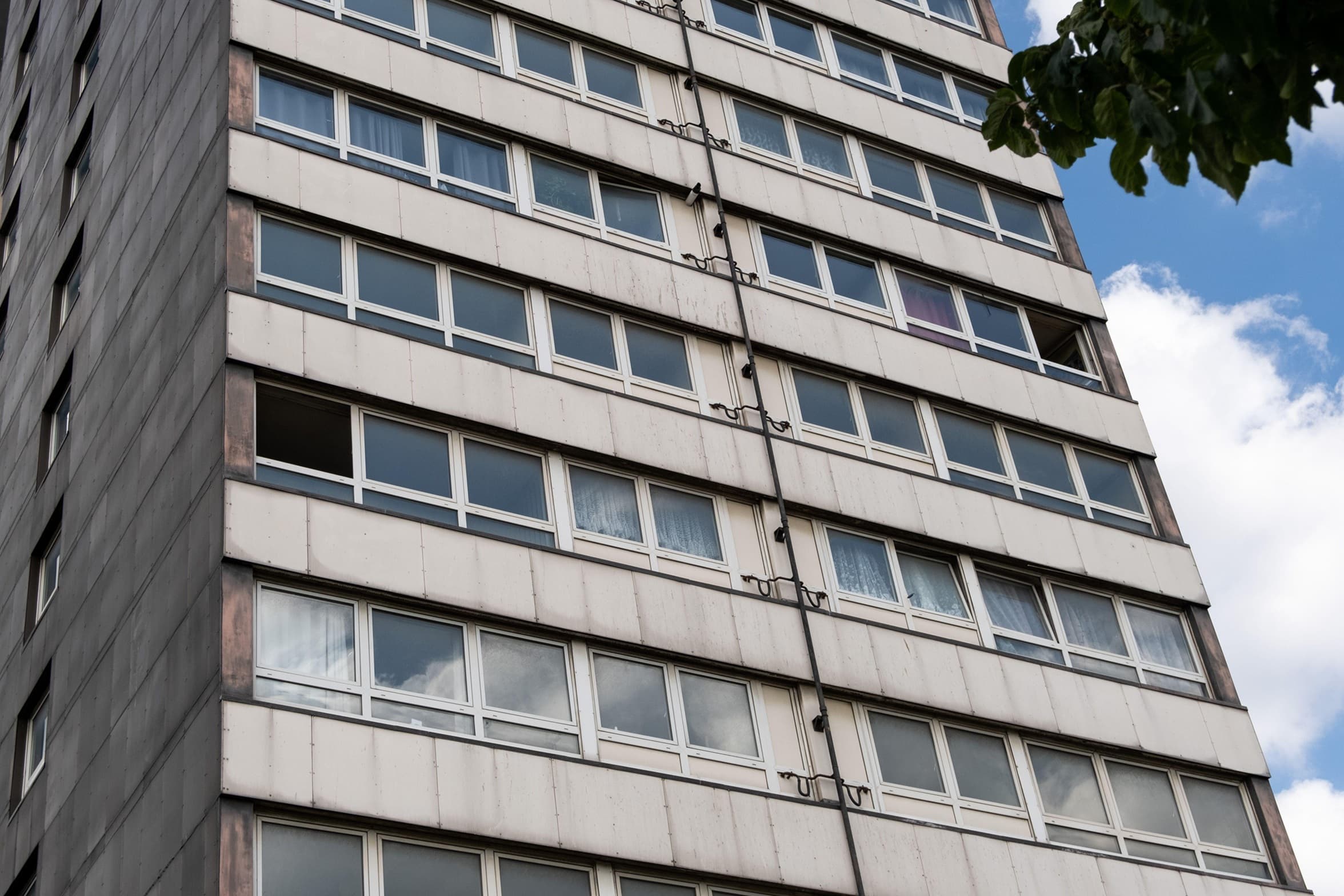
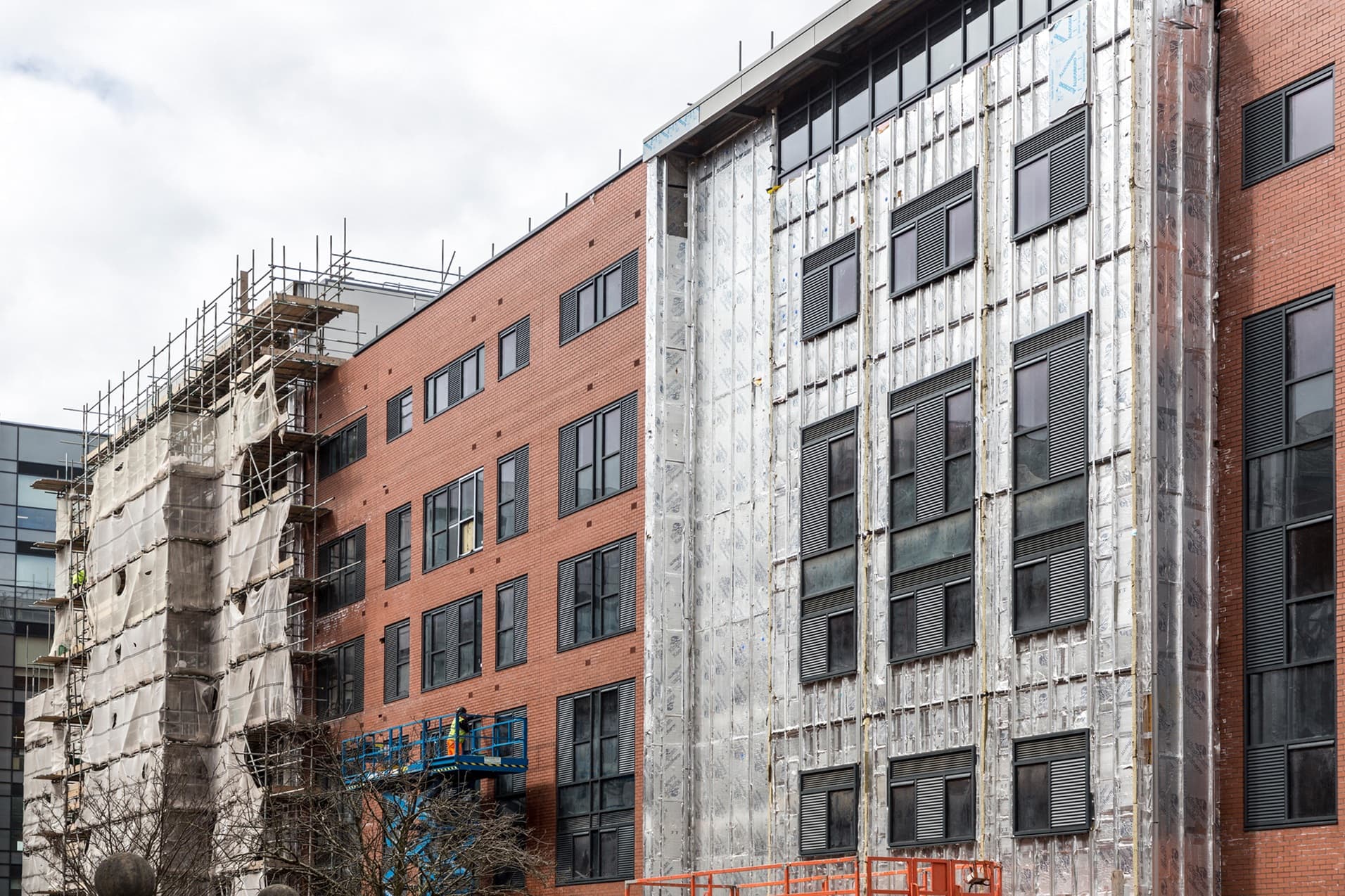
Cladding and Façade Systems
We inspect cladding systems and façade elements for:
- Loose or displaced panels.
- Failed fixings.
- Delamination.
- Water ingress.
- Corrosion.
- Material deterioration.
- Defective interfaces and joints.
This may include:
- Rainscreen cladding.
- Metal cladding.
- Composite panel systems.
- Brick slip systems.
- Render systems.
- Curtain walling.
- Glazed façades.
Parapets, Cornices and High Level Features
High level elements can present significant life safety risks where deterioration occurs.
We assess:
- Parapet stability.
- Decorative stonework.
- Cornices and projections.
- Copings.
- Chimneys.
- Roof edge details.
- Loose masonry and ornamental features.
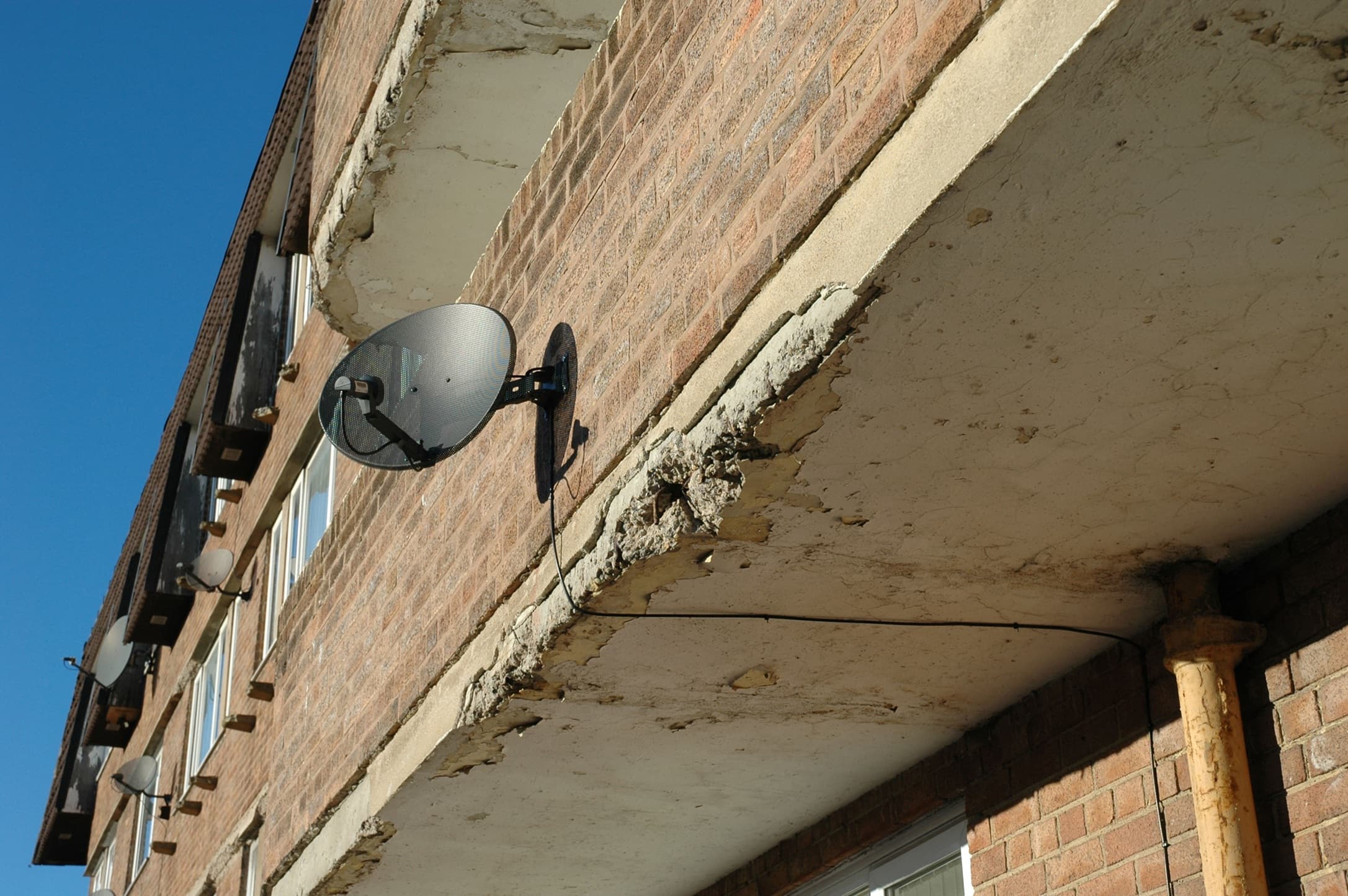
Balconies and Balustrades
Balcony defects can create both structural and safety risks.
Our assessments consider:
- Structural movement.
- Corrosion.
- Water ingress.
- Failed coatings.
- Defective drainage.
- Unsafe balustrades.
- Deteriorated soffits.
- Timber decay.
Windows, Glazing and Curtain Walling
We assess visible defects affecting windows and glazed systems including:
- Failed seals.
- Loose glazing.
- Corroded frames.
- Movement.
- Defective interfaces.
- Water ingress.
- Deteriorated fixings.
Soffits, Fascias and Rainwater Goods
Water management failures often contribute to wider façade deterioration.
We assess:
- Blocked or defective gutters.
- Failed downpipes.
- Corrosion.
- Loose soffits.
- Defective fascias.
- Water staining.
- Overflow and drainage issues.
Fixed Attachments and Ancillary Elements
We also consider risks associated with:
- Plant equipment.
- External lighting.
- Signage.
- Telecommunications equipment.
- Solar panels.
- Roof mounted installations.
- Security systems.
- Decorative attachments.
Risk Based Assessment Methodology
At Anstey Horne, our Building Fabric Risk Assessments are based on a structured risk methodology.
We consider:
- The likelihood of failure.
- The severity of potential consequences.
- Occupancy levels.
- Public access below the façade.
- Building height and exposure.
- Environmental conditions.
- Maintenance history.
- Construction type and age.
- Previous repairs or known defects.
- Accessibility for inspection and maintenance.
This risk based approach helps clients understand where action is most urgently required.
Inspection Techniques and Access Methods
Depending on the building and agreed scope, inspections may include:
- Ground based visual inspections.
- High level visual inspections.
- Drone surveys.
- Binocular and camera assisted inspections.
- MEWP access.
- Rope access inspections.
- Targeted intrusive investigations.
- Façade opening up works.
Where specialist investigations are required, we can coordinate multidisciplinary teams including façade engineers, structural engineers, fire consultants and access specialists.
What You Receive from a Building Fabric Risk Assessment
Our reports are designed to provide practical, actionable advice.
A typical report may include:
- Executive summary.
- Building description and construction overview.
- Assessment methodology.
- Photographic records.
- Identification of visible defects.
- Risk analysis and prioritisation.
- Commentary on likely causes of deterioration.
- Recommendations for remedial works.
- Recommendations for further investigation.
- Monitoring and maintenance guidance.
- Suggested future inspection intervals.
- Risk management recommendations.
Our reporting is clear, concise and commercially focused.
We help clients understand not only what defects exist, but also what level of risk they present and how those risks can be managed proportionately.
How Often Should an Assessment Be Carried Out?
Inspection frequency depends on several factors including:
- Building height.
- Occupancy.
- Façade complexity.
- Exposure to weather.
- Construction type.
- Age and condition.
- Previous defects.
- Public interface risk.
For many buildings, a Building Fabric Risk Assessment every three to five years may be appropriate.
Higher risk buildings or buildings with identified defects may require more frequent inspections or ongoing monitoring.
Building Fabric Risk Assessments and Building Safety Responsibilities
Building owners and duty holders increasingly require evidence that building safety risks are being actively managed.
A Building Fabric Risk Assessment can support:
- Building safety management strategies.
- Planned preventative maintenance programmes.
- Asset management planning.
- Insurance risk management.
- Dilapidations and liability management.
- Due diligence during acquisition.
- Compliance evidence.
- Resident and occupier safety assurance.
- Funding and refinancing requirements.
For higher risk buildings, façade safety forms an important part of wider building safety governance.
Why Choose Anstey Horne for Building Fabric Risk Assessments?
Anstey Horne is one of the UK’s leading independent property and construction consultancies.
Our multidisciplinary expertise allows us to provide Building Fabric Risk Assessments informed by practical experience across:
- Building surveying.
- Façade assessment.
- Defect diagnosis.
- Fire safety.
- Planned maintenance.
- Residential asset management.
- Commercial property.
- Historic buildings.
- Building pathology.
- Compliance and risk management.
We understand that building fabric risk is not simply a technical issue.
Responsibility for external fabric often sits across multiple parties including freeholders, leaseholders, managing agents, residents, investors and statutory duty holders.
Our advice helps clients understand:
- Physical building risks.
- Liability exposure.
- Maintenance priorities.
- Long term asset implications.
- Practical risk mitigation strategies.
Because we provide wider surveying, façade and fire safety services, our Building Fabric Risk Assessments can form part of an integrated building safety and asset management strategy.
Benefits of a Building Fabric Risk Assessment
A professionally prepared Building Fabric Risk Assessment helps clients:
- Reduce the risk of falling debris and façade failure.
- Identify defects before major deterioration occurs.
- Improve occupant and public safety.
- Support compliance and governance obligations.
- Plan maintenance more effectively.
- Reduce reactive repair costs.
- Improve asset protection.
- Support insurance and funding discussions.
- Prioritise remedial expenditure.
- Demonstrate proactive risk management.
Building Fabric Risk Assessments Across the UK
Anstey Horne provides Building Fabric Risk Assessments for clients throughout the UK.
We work across:
- Residential developments.
- Commercial offices.
- Mixed use schemes.
- Retail assets.
- Education estates.
- Healthcare properties.
- Industrial facilities.
- Heritage and listed buildings.
- Public sector estates.
- High rise residential buildings.
Our teams understand the technical, operational and regulatory challenges associated with managing external building fabric across complex property portfolios.
Proactive Building Fabric Risk Management
Buildings inevitably deteriorate over time.
The key to effective risk management is identifying problems before defects develop into dangerous failures.
A Building Fabric Risk Assessment provides building owners and responsible parties with the information needed to make informed decisions, manage liabilities and maintain safer buildings.
Contact Anstey Horne
To discuss a Building Fabric Risk Assessment for your building or property portfolio, contact Anstey Horne.
Our specialists can advise on appropriate inspection strategies, risk management approaches and next steps for your building.
To arrange a no-obligation consultation – please call 020 4534 3130.
If you rather we called you, or for further information please fill in our contact form and we will be in touch.
For more information on all aspects of this service see the collection of articles in our blog.
To discuss Building Fabric Risk Assessments please call 020 4534 3130.
For further information, please contact :

Paul Phillips
BSc (Hons) MRICS C.BuildE MCABE
Senior Director
Building Surveying
London

Alex Hayward
MSc MRICS
Director
Building Surveying
London

Will Mantell-Sayer
BSc (Hons) MRICS
Associate Director
Building Surveying
Norwich