Fire Door Regulations UK Guide
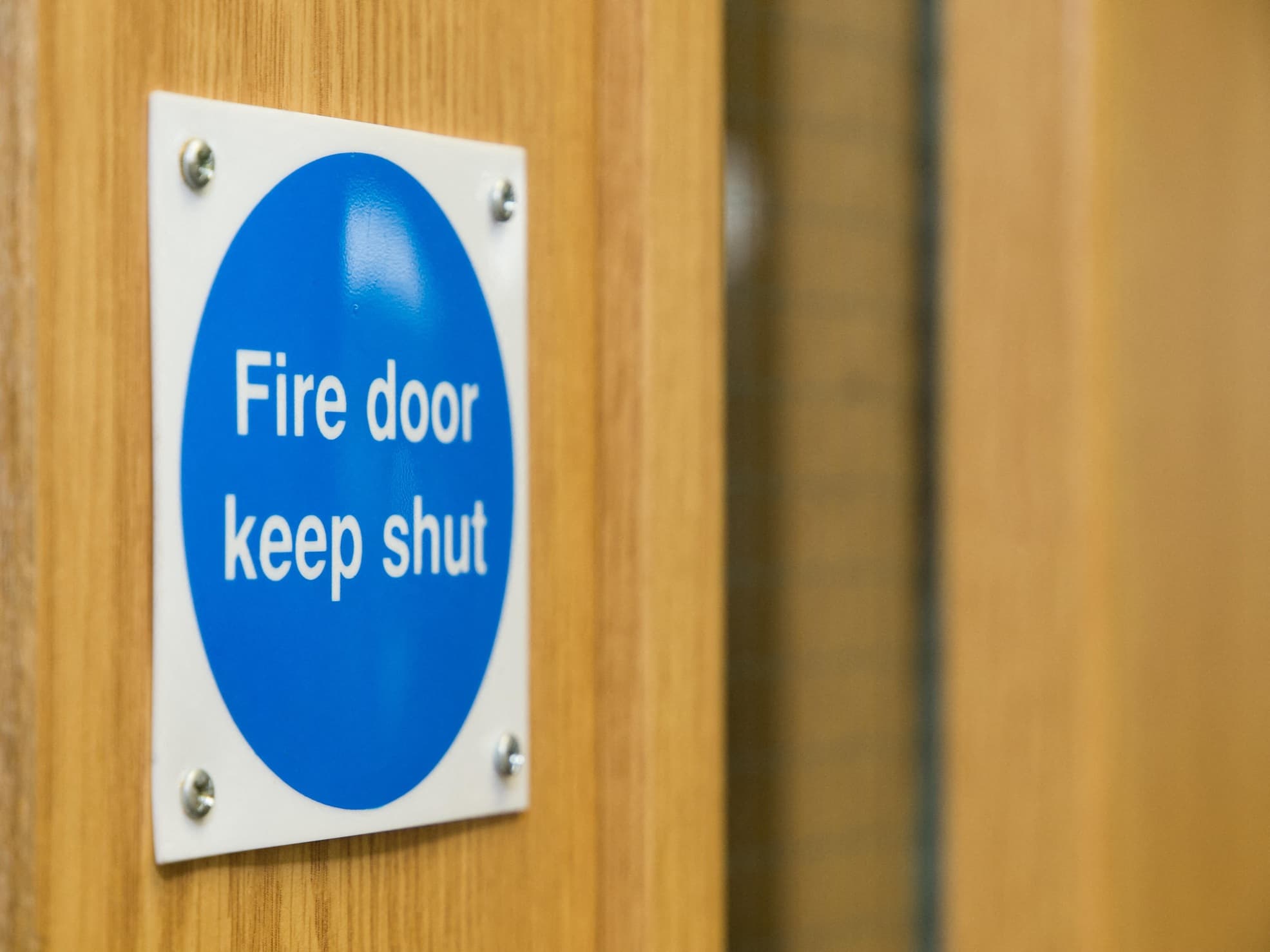
Fire door regulations in the UK have become significantly more stringent following major changes to fire safety legislation in recent years. Building owners, landlords, managing agents, housing associations, employers, and Responsible Persons must now meet higher standards for fire door inspection, maintenance, record keeping, and resident communication.
Fire doors are one of the most important passive fire protection measures within any building. When properly specified, installed, and maintained, they slow the spread of fire and smoke, protect escape routes, and provide occupants with critical time to evacuate safely.
This guide explains the key fire door regulations in the UK, outlines legal responsibilities, and provides practical advice on compliance, inspections, maintenance, and fire door surveys.
What Are Fire Doors?
A fire door is a specially engineered door assembly designed to resist the spread of fire and smoke for a specified period. Fire doors form part of a building’s compartmentation strategy and are essential for protecting escape routes and limiting fire spread.
The most common ratings include:
- FD30: Provides 30 minutes of fire resistance
- FD60: Provides 60 minutes of fire resistance
A compliant fire door consists of several tested components working together as a complete system, including:
- Door leaf
- Door frame
- Intumescent strips
- Smoke seals
- Hinges
- Self-closing devices
- Fire-rated glazing
- Locks and ironmongery
Each element contributes to the door’s fire performance. Removing or altering components can compromise compliance and reduce effectiveness during a fire.
Why Fire Door Regulations Matter
Fire doors protect both life and property. Without functioning fire doors:
- Smoke can spread rapidly through corridors and stairwells
- Escape routes may become unusable
- Occupants can become trapped
- Firefighters face greater operational risks
- Fire damage can escalate significantly
The Grenfell Tower tragedy highlighted widespread concerns regarding fire safety management, including the condition and maintenance of fire doors. The subsequent Grenfell Tower Inquiry Phase 1 Report led to substantial regulatory reform and increased enforcement expectations across the UK fire safety sector.
The Fire Safety (England) Regulations 2022 introduced new legal duties specifically relating to fire doors in residential buildings.
Key Fire Door Regulations UK Building Owners Must Understand
Regulatory Reform (Fire Safety) Order 2005
The Regulatory Reform (Fire Safety) Order 2005 remains the principal piece of fire safety legislation in England and Wales.
The legislation applies to:
- Commercial buildings
- Offices
- Schools
- Hotels
- Healthcare premises
- Industrial buildings
- Common parts of residential buildings
The legislation places legal responsibility on the “Responsible Person” to ensure adequate fire precautions remain in place and are properly maintained.
Under the Fire Safety Order, Responsible Persons must:
- Carry out suitable fire risk assessments
- Maintain fire precautions
- Ensure safe means of escape
- Keep fire doors operational and effective
- Address identified fire safety defects
The legislation recognises fire doors as critical life safety systems that require ongoing management and maintenance.
Fire Safety Act 2021
The Fire Safety Act 2021 clarified that flat entrance doors and external walls fall within the scope of the Fire Safety Order.
This clarification removed previous uncertainty and strengthened accountability for fire door inspections within residential buildings.
The Act reinforced responsibilities for:
- Flat entrance fire doors
- Fire door maintenance
- Inspection programmes
- Fire risk assessment considerations
Fire Safety (England) Regulations 2022
The Fire Safety (England) Regulations 2022 came into force on 23 January 2023.
These regulations apply to buildings in England containing two or more domestic premises with common parts.
The regulations introduced mandatory requirements relating specifically to fire door inspections and resident communication.
Key Fire Door Requirements Under the Regulations
Responsible Persons in residential buildings over 11 metres in height must:
- Undertake annual inspections of flat entrance fire doors
- Undertake quarterly inspections of communal fire doors
- Provide residents with fire door safety information
- Keep records of inspections and access attempts
The Government guidance confirms that these inspections are intended to be straightforward visual checks.
Failure to comply may result in enforcement action or prosecution where resident safety is compromised.
Who Is Responsible for Fire Door Compliance?
The Responsible Person carries legal responsibility for ensuring compliance with fire safety legislation.
This may include:
- Building owners
- Managing agents
- Freeholders
- Employers
- Housing associations
- Facilities managers
- Duty holders under building safety legislation
The Responsible Person must ensure fire doors remain effective throughout the building lifecycle.
Fire Door Inspection Requirements
Residential Buildings Above 11 Metres
For residential buildings where the top occupied floor exceeds 11 metres:
- Flat entrance fire doors must be checked every 12 months
- Communal fire doors must be inspected every 3 months
Responsible Persons must use “best endeavours” to gain access to flat entrance doors for inspection purposes.
Information for Residents
The regulations require residents to receive information explaining:
- Why fire doors are important
- That fire doors should remain closed when not in use
- That self-closing devices must not be tampered with
- How to report damage or faults
This information must be provided:
- To all new residents
- To existing residents every 12 months
What Happens During a Fire Door Inspection?
Professional fire door inspections assess whether the doorset remains fit for purpose and compliant with fire safety requirements.
Typical inspection areas include:
Door Leaf Condition
Inspectors assess:
- Structural damage
- Warping
- Cracks
- Holes
- Delamination
- Damage to glazing
Damage affecting the integrity of the door may compromise fire resistance performance.
Self-Closing Devices
Self-closing devices are essential because fire doors only work correctly when fully closed.
Government guidance recommends checking:
- Closure from a fully open position
- Closure from approximately 15 degrees open
The door must fully engage with the frame and latch correctly.
Door Gaps
The recommended gap between the door and frame should generally not exceed 4mm.
Excessive gaps allow smoke and fire to spread more rapidly.
Smoke Seals and Intumescent Strips
Inspectors verify that seals:
- Remain continuous
- Are undamaged
- Have not been painted over
- Maintain effective contact with the frame
Intumescent strips expand during fire exposure to restrict fire spread.
Hinges and Ironmongery
Inspectors assess:
- Hinge condition
- Screw fixings
- Locks and latches
- Hold-open devices
- Door coordinators
- Glazing systems
Loose or damaged hardware can affect fire door performance significantly.
Unauthorised Alterations
Inspectors often identify:
- Cat flaps
- Letterboxes
- Non-compliant glazing
- Improper repairs
- Resident-installed replacement doors
The Government guidance specifically notes the importance of identifying unauthorised flat entrance door replacements.
Fire Door Regulations for Commercial Buildings
Commercial premises must maintain effective fire doors as part of their fire safety management systems.
Typical commercial fire door locations include:
- Stair cores
- Escape corridors
- Plant rooms
- Service risers
- Kitchen areas
- Electrical cupboards
- High-risk storage rooms
Inspection frequencies should reflect building use, occupancy levels, and fire risk assessment findings.
Higher-risk environments often require more frequent inspection regimes.
Common Fire Door Compliance Failures
Fire door inspections across the UK regularly identify recurring defects including:
- Missing self-closing devices
- Fire doors wedged open
- Excessive perimeter gaps
- Damaged smoke seals
- Incorrect glazing
- Poor installation
- Damaged hinges
- Missing certification labels
- Unapproved alterations
Many failures occur because buildings lack structured inspection and maintenance programmes.
Fire Door Certification and Standards
Several standards and certification schemes apply to fire doors in the UK.
BS 8214
British Standard BS 8214 provides guidance on:
- Installation
- Inspection
- Maintenance of timber-based fire doors
BS 476 and BS EN 1634
These standards govern fire resistance testing and performance.
Third-Party Certification
Common certification schemes include:
- BM TRADA Q-Mark
- Certifire
- FIRAS
Third-party certification provides assurance regarding product performance and installer competence.
Do Older Fire Doors Need Replacing?
One important clarification within the Government guidance confirms that older fire doors without modern certification do not automatically require replacement.
The guidance recognises that:
- Existing doors may remain suitable
- Suitability should be assessed through fire risk assessment
- Functional performance remains the key consideration
This approach helps avoid unnecessary replacement costs while maintaining appropriate fire safety standards.
Fire Door Maintenance Best Practices
Effective fire door management requires ongoing maintenance rather than reactive repairs.
Implement Planned Inspection Programmes
Best practice includes:
- Quarterly communal area inspections
- Annual flat entrance door inspections
- Routine spot checks
- Prompt defect reporting procedures
Carry Out Timely Repairs
Common maintenance activities include:
- Replacing seals
- Adjusting self-closers
- Repairing hardware
- Replacing damaged glazing
- Correcting alignment issues
Delaying repairs can increase both fire risk and future remediation costs.
Keep Accurate Records
Responsible Persons should maintain records of:
- Inspection dates
- Inspection findings
- Access attempts
- Completed repairs
- Contractor competence
- Remedial works
The regulations specifically require records relating to flat entrance door checks and unsuccessful access attempts.
Educate Occupants
Resident awareness plays a major role in maintaining compliance.
Occupants should understand:
- Why fire doors must remain closed
- Why wedging doors open is dangerous
- How to report defects quickly
- Why alterations require approval
The Importance of Professional Fire Door Surveys
Professional fire door surveys provide detailed assessments of compliance, condition, and risk.
A competent fire door surveyor typically:
- Identifies defects
- Assesses compliance against relevant standards
- Produces photographic evidence
- Prioritises remedial actions
- Supports fire risk assessments
- Creates audit trails for compliance purposes
Detailed surveys are especially important for:
- High-rise residential buildings
- Student accommodation
- Healthcare facilities
- Hotels
- Large commercial properties
Enforcement and Penalties
Fire and Rescue Authorities can take enforcement action where fire door standards fall below legal requirements.
Potential consequences include:
- Enforcement notices
- Alterations notices
- Prohibition notices
- Prosecution
- Unlimited fines
- Imprisonment in severe cases
Enforcement activity relating to fire door failures has increased significantly following recent legislative reforms.
The Role of Fire Door Surveys in Compliance
Professional fire door surveys help organisations:
- Demonstrate due diligence
- Meet legal obligations
- Reduce liability exposure
- Improve resident safety
- Prioritise maintenance budgets
- Support broader building safety strategies
For landlords, housing providers, and managing agents, surveys form a key component of proactive fire safety management.
Choosing a Fire Door Inspection Company
When selecting a fire door survey provider, organisations should look for:
- Qualified inspectors
- Relevant accreditation
- Experience with similar building types
- Detailed digital reporting
- Photographic evidence
- Clear remedial recommendations
- Knowledge of current legislation
Competence is increasingly important under evolving building safety legislation.
Future Changes to UK Fire Door Regulations
Fire safety legislation continues to evolve following:
- The Building Safety Act
- Grenfell Inquiry recommendations
- Ongoing regulatory reform
Future developments may include:
- Increased digital compliance requirements
- Enhanced competence standards
- Greater accountability for duty holders
- More rigorous enforcement activity
Building owners should adopt proactive compliance strategies rather than waiting for enforcement action.
Conclusion - Fire Door Regulations UK
Fire door regulations in the UK now place greater emphasis on inspection, maintenance, record keeping, and resident engagement than ever before.
Fire doors remain one of the most important passive fire protection measures within any building. Properly maintained fire doors protect escape routes, contain fire and smoke, and save lives.
The Fire Safety (England) Regulations 2022 strengthened legal duties relating to fire door inspections and resident communication, particularly in higher-risk residential buildings.
Organisations that implement structured fire door inspection and maintenance programmes reduce legal risk, improve occupant safety, and demonstrate strong building safety governance.
Professional fire door surveys play a critical role in identifying defects, supporting compliance, and ensuring long-term fire safety performance.
FAQs - Fire Door Regulations UK
What are the main fire door regulations in the UK?
The key legislation includes:
- Regulatory Reform (Fire Safety) Order 2005
- Fire Safety Act 2021
- Fire Safety (England) Regulations 2022
These regulations place legal duties on Responsible Persons to maintain fire safety measures including fire doors.
How often should fire doors be inspected?
In residential buildings over 11 metres:
- Flat entrance doors require annual inspections
- Communal fire doors require quarterly inspections
Commercial inspection frequencies depend on risk assessment findings.
What is the allowed gap around a fire door?
The recommended gap between the door and frame should generally not exceed 4mm.
Do fire doors need self-closing devices?
Yes. Most fire doors protecting escape routes or compartmentation require self-closing devices that fully close the door into the frame.
Can residents replace flat entrance fire doors?
Replacement doors should only be installed with approval from the Responsible Person to ensure fire safety compliance is maintained.
Are older uncertified fire doors non-compliant?
No. Government guidance confirms that older doors without modern certification may still remain suitable where they adequately address fire risk and remain functional.
Who can carry out fire door inspections?
Routine visual checks may be carried out by trained personnel. Detailed surveys, repairs, and remediation should be undertaken by competent fire door specialists.
Need a professional Fire Door Survey?
At Anstey Horne, our accredited fire safety consultants provide expert fire door surveys to help you meet your legal obligations with confidence. We inspect, report, and advise on full compliance — from residential blocks to complex commercial sites.
Get in touch with us today to arrange a no-obligation consultation - please call 020 4534 3130.
For further information on Fire Door Surveys please fill in our contact form and we will be in touch.
For further information on all aspects of this service see the collection of articles in our blog.
To commission a Fire Door Survey please call 020 4534 3130.
For further information on Fire Door Surveys, Fire Risk Assessment, Retrospective Fire Strategies, FRAEWs or advice in respect of your obligations as a building owner, developer or manager, please contact :

Stuart Barrow
AIFireE, MIFSM
Director, Head of Fire Safety
Fire Consultancy
London

Sarah Taylor
Business Support Manager
Building Surveying
London