Is a FRAEW Survey a Legal Requirement?
Since the introduction of the Building Safety Act 2022 and increased scrutiny of external wall fire safety following the Grenfell Tower tragedy, many building owners, managing agents, resident management companies and developers have asked the same question: is a FRAEW survey a legal requirement?
At a Glance
A FRAEW is not a legal requirement for every residential building.
Fire safety legislation requires responsible persons to assess and manage external wall fire risks.
A FRAEW is typically only needed where the building’s external walls present a higher fire risk.
Understanding the FRAEW Legal Requirement
The answer is more nuanced than a simple yes or no. There is currently no specific law in England that states every residential building must have a Fire Risk Appraisal of External Walls (FRAEW). However, legislation places clear duties on responsible persons and accountable persons to assess and manage fire risks associated with external wall systems. In many cases, a FRAEW becomes the only practical way to demonstrate compliance with those legal duties.
Understanding the FRAEW legal requirement is therefore essential for anyone responsible for the safety of residential buildings.
This article explains what a FRAEW survey is, the legal framework behind it, when it becomes necessary, and how it helps building owners comply with their statutory obligations.
What Is a FRAEW Survey?
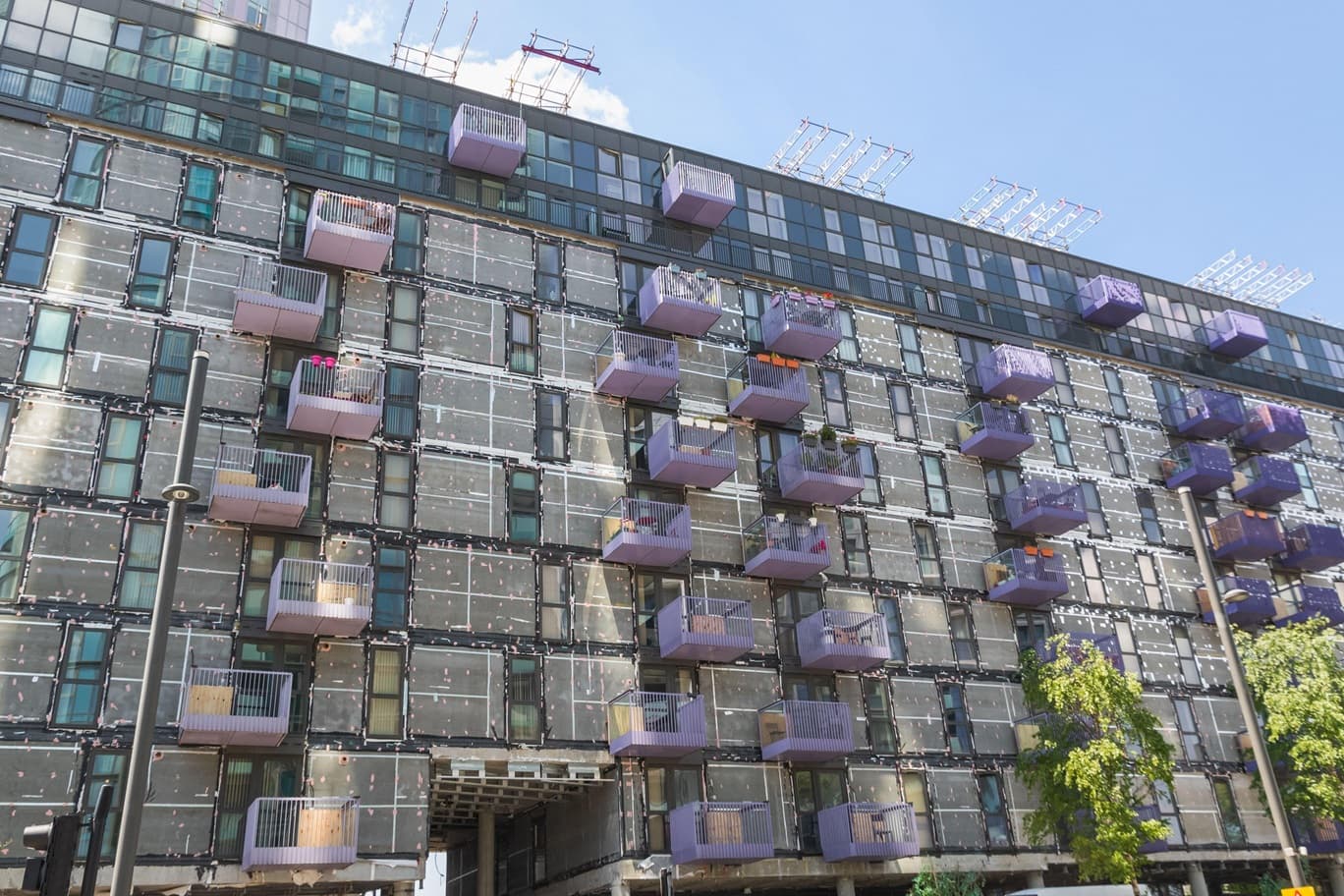
A Fire Risk Appraisal of External Walls, commonly known as a FRAEW, is a specialist fire safety assessment of a building’s external wall construction.
The assessment evaluates the fire risks associated with:
- Cladding systems
- Insulation materials
- Cavity barriers
- Fire stopping
- Balconies
- External attachments
- Construction details
- Façade interfaces
A FRAEW follows the methodology set out in PAS 9980, the recognised code of practice for assessing fire risk in external wall construction.
Unlike an EWS1 form, which supports mortgage lending decisions, a FRAEW focuses on life safety and fire risk management.
Why Was PAS 9980 Introduced?
Following Grenfell, many residential buildings became subject to extensive investigations into external wall systems.
The industry faced several challenges:
- Lack of consistency in assessments
- Excessive remediation recommendations
- Mortgage lending restrictions
- Confusion regarding risk levels
- Inconsistent professional advice
PAS 9980 was developed to create a standardised methodology for assessing external wall fire risk.
The document allows competent fire engineers to evaluate buildings using a risk-based approach rather than relying solely on prescriptive rules.
Today, PAS 9980 represents the recognised industry standard for FRAEW assessments.
What Legislation Relates to the FRAEW Legal Requirement?
Several pieces of legislation create the framework that drives the need for FRAEW surveys.
The Regulatory Reform (Fire Safety) Order 2005
The Fire Safety Order remains the cornerstone of fire safety legislation in England and Wales.
The legislation requires responsible persons to:
- Identify fire hazards
- Assess risks
- Implement suitable control measures
- Maintain fire safety arrangements
- Keep assessments under review
Following legislative changes introduced after Grenfell, the scope of the Fire Safety Order explicitly includes external walls.
This means responsible persons must consider:
- Cladding
- Balconies
- External wall systems
- External fire spread risks
If a building contains potentially combustible materials, a FRAEW may be required to demonstrate compliance.
The Fire Safety Act 2021
The Fire Safety Act clarified that the Fire Safety Order applies to:
- Building structure
- External walls
- Cladding systems
- Flat entrance doors
This amendment removed uncertainty regarding responsibility for external wall fire risks.
The legislation effectively reinforced the need for suitable assessments where concerns exist.
The Building Safety Act 2022
The Building Safety Act introduced significant reforms for higher-risk residential buildings.
The legislation created new duties for:
- Accountable Persons
- Principal Accountable Persons
- Building owners
- Dutyholders
These parties must understand and manage building safety risks throughout the lifecycle of a building.
External wall fire risks form a key component of this responsibility.
A FRAEW often becomes an essential document within the wider building safety case.
The Fire Safety (England) Regulations 2022
These regulations introduced additional obligations regarding:
- Fire safety information
- Resident communication
- Fire door inspections
- Wayfinding signage
- Building information
Although the regulations do not specifically mandate FRAEW surveys, compliance often requires a detailed understanding of façade fire risks.
Is a FRAEW Survey Legally Required?
This is where many building owners become confused.
There is currently no legislation stating:
“Every residential building must obtain a FRAEW survey.”
However, legislation does require responsible persons and accountable persons to assess and manage external wall fire risks.
If those risks cannot be adequately understood through existing information, a FRAEW becomes necessary.
In practical terms, many organisations find that obtaining a FRAEW is the only realistic method of demonstrating compliance with their legal obligations.
Therefore, while the survey itself may not be directly mandated, the underlying legal duties often make a FRAEW essential.
When Does a FRAEW Become Necessary?
A FRAEW is typically recommended when there is uncertainty regarding external wall fire performance.
Examples include:
Buildings with Cladding
Any building containing:
- ACM cladding
- HPL panels
- Timber cladding
- Composite panels
- Metal rainscreen systems
may require a FRAEW.
Buildings with Combustible Materials
Assessments often become necessary where external walls contain:
- Polyethylene cores
- Combustible insulation
- Timber products
- Combustible membranes
Buildings Over 11 Metres
Government guidance frequently focuses on buildings exceeding 11 metres in height.
While height alone does not create a legal requirement, taller buildings often attract greater scrutiny.
Buildings Subject to Mortgage Concerns
Lenders frequently seek evidence that external wall risks have been properly assessed.
A FRAEW may help support mortgage transactions and reassure stakeholders.
Buildings Undergoing Safety Reviews
Housing associations, local authorities and private landlords often commission FRAEWs as part of broader safety programmes.
Who Has Responsibility for Obtaining a FRAEW?
The answer depends on ownership and management arrangements.
Potential responsible parties include:
- Freeholders
- Building owners
- Housing associations
- Resident management companies
- Right to Manage companies
- Local authorities
- Principal Accountable Persons
The responsible person must determine whether additional investigation of external wall risks is required.
Where concerns exist, they may need to commission a FRAEW.
How Does a FRAEW Help Demonstrate Compliance?
A FRAEW provides documented evidence that a competent specialist has assessed external wall fire risks.
The report typically includes:
- Building description
- Construction review
- Desktop assessment
- Site inspection findings
- Risk analysis
- Recommendations
- Risk rating
- Remediation priorities
This information helps responsible persons demonstrate that they have:
- Considered relevant fire risks
- Obtained specialist advice
- Taken reasonable steps
- Implemented proportionate measures
Should enforcement action arise, this evidence can be extremely valuable.
What Happens If You Do Not Obtain a FRAEW?
The consequences depend on the circumstances.
Potential issues include:
Regulatory Scrutiny
Fire and rescue authorities may question how external wall risks have been assessed.
Building Safety Regulator Concerns
For higher-risk buildings, insufficient understanding of façade risks could create difficulties when demonstrating compliance.
Insurance Challenges
Insurers increasingly seek information regarding external wall construction.
Absence of a FRAEW may affect underwriting decisions.
Mortgage Market Problems
Purchasers and lenders often require reassurance regarding façade fire safety.
A FRAEW may assist where concerns arise.
Resident Complaints
Occupants increasingly expect transparency regarding building safety.
Failure to investigate potential risks can damage confidence and reputation.
Does Every Building Need a FRAEW?
No.
Many buildings do not require a FRAEW.
Examples may include:
- Traditional masonry construction
- Buildings with non-combustible façades
- Low-risk structures
- Buildings with well-documented compliant construction
A competent fire risk assessor or fire engineer can determine whether further investigation is necessary.
The key principle is proportionality.
The existence of legal duties does not automatically mean every building requires a FRAEW.
What Is the Difference Between a FRA and a FRAEW?
This distinction causes considerable confusion.
A Fire Risk Assessment (FRA) examines fire safety management within a building.
Typical topics include:
- Means of escape
- Fire alarms
- Emergency lighting
- Fire doors
- Housekeeping
- Fire procedures
A FRAEW focuses specifically on external wall construction and façade fire risks.
Many buildings require both assessments.
The FRA and FRAEW complement each other rather than replace one another.
What Is the Difference Between a FRAEW and an EWS1 Form?
An EWS1 form supports mortgage lending decisions.
A FRAEW assesses life safety risks.
Key differences include:
FRAEW
- Fire safety assessment
- PAS 9980 methodology
- Risk management focus
- Detailed technical review
EWS1
- Lending support document
- Market transaction focus
- Completed by qualified professionals
- Often informed by FRAEW findings
Many lenders now place greater emphasis on comprehensive risk assessments rather than relying solely on EWS1 documentation.
Who Can Carry Out a FRAEW?
A FRAEW should only be undertaken by suitably qualified and competent professionals.
This typically includes experienced fire engineers with expertise in:
- Façade systems
- Building construction
- Fire dynamics
- Fire engineering principles
- PAS 9980 methodology
Competence remains one of the most important aspects of the process.
The quality of the assessment depends heavily on the expertise of the assessor.
What Does a Typical FRAEW Process Involve?
A comprehensive FRAEW usually includes several stages.
Desktop Review
The assessor reviews:
- Drawings
- Specifications
- Construction records
- Fire strategy documents
- Previous reports
Site Inspection
The building undergoes visual inspection.
Intrusive Investigation
Where necessary, opening-up works allow confirmation of hidden construction details.
Risk Assessment
The assessor evaluates fire spread potential and consequences.
Reporting
The final report provides findings, recommendations and risk ratings.
Many organisations follow a process involving approximately one week for desktop review and planning, followed by intrusive inspections and reporting over several weeks depending on building complexity.
The Future of the FRAEW Legal Requirement
The regulatory environment continues to evolve.
Government, regulators, lenders and insurers increasingly expect robust evidence that external wall risks have been properly assessed.
Although legislation does not currently mandate FRAEWs for all residential buildings, industry expectations continue to move toward comprehensive risk-based assessments.
As building safety standards mature, the importance of FRAEWs is likely to increase rather than diminish.
Why Choose Anstey Horne for FRAEW Assessments?
Anstey Horne provides independent, risk-based FRAEW assessments across the UK.
Our multidisciplinary team combines expertise in:
- Fire engineering
- Building surveying
- Façade construction
- Building safety legislation
- Cladding remediation
We follow PAS 9980 methodology and deliver clear, proportionate advice that supports compliance while avoiding unnecessary remediation costs.
Whether you are a freeholder, managing agent, housing association or accountable person, our specialists can help you understand your obligations and manage external wall risks effectively.
Conclusion
Understanding the FRAEW legal requirement is essential for anyone responsible for residential buildings.
A FRAEW survey is not directly mandated by legislation in every case. However, the Fire Safety Order, Fire Safety Act 2021 and Building Safety Act 2022 create clear legal obligations to assess and manage external wall fire risks.
Where those risks cannot be adequately understood through existing information, a FRAEW often becomes the most effective way to demonstrate compliance.
For many residential buildings, obtaining a FRAEW is not simply good practice. It is a practical and defensible response to the legal duties imposed on responsible persons and accountable persons.
If you are unsure whether your building requires a FRAEW assessment, obtaining specialist advice can help you understand your responsibilities and protect both residents and stakeholders.
FAQs – FRAEW Legal Requirements
What does FRAEW stand for?
FRAEW stands for Fire Risk Appraisal of External Walls. It is a specialist assessment of external wall fire risks conducted in accordance with PAS 9980.
Is a FRAEW survey a legal requirement?
There is no law requiring every residential building to have a FRAEW. However, legal duties to assess external wall fire risks often make a FRAEW necessary to demonstrate compliance.
Who is responsible for arranging a FRAEW?
Responsibility usually falls to the building owner, freeholder, managing agent, housing association, resident management company or accountable person.
Does every block of flats need a FRAEW?
No. The need for a FRAEW depends on the building’s construction, materials, height and level of risk.
Can a Fire Risk Assessment replace a FRAEW?
No. A standard Fire Risk Assessment examines general fire safety management, while a FRAEW specifically assesses external wall fire risks.
Is a FRAEW the same as an EWS1 form?
No. A FRAEW assesses life safety risks, while an EWS1 form supports mortgage lending decisions.
How long does a FRAEW take?
Timescales vary, but many projects involve approximately one week for desktop review followed by site inspections, investigations and reporting over several additional weeks.
What standard is used for FRAEW assessments?
The recognised methodology is set out in PAS 9980, the British Standard code of practice for assessing fire risk in external wall construction.
Can a FRAEW help avoid unnecessary remediation?
Yes. PAS 9980 promotes a risk-based approach that may identify alternative mitigation measures instead of costly remediation works.
How often should a FRAEW be updated?
The assessment should be reviewed whenever significant changes occur to the building, its occupancy, or relevant fire safety information. It should also form part of ongoing building safety management.
Contact
If you’re responsible for a residential building and unsure about the safety of its external walls, speak to a competent FRAEW provider. At Anstey Horne, our expert team of fire engineers and surveyors deliver independent, proportionate, and fully compliant FRAEW Surveys.
Commission a PAS 9980-aligned FRAEW first to set your safety strategy, and let that evidence support any EWS1 a lender requests. You’ll cut duplication, reduce resident disruption, and make faster, better-defended decisions.
Get in touch with us today to arrange a no-obligation consultation – please call 020 4534 3130.
If you’d rather we called you, or for further information on FRAEW Surveys please fill in our contact form and we will be in touch.
For further information on all aspects of this service see the collection of articles in our blog.