Fire Safety and Building Fabric Risk Assessments
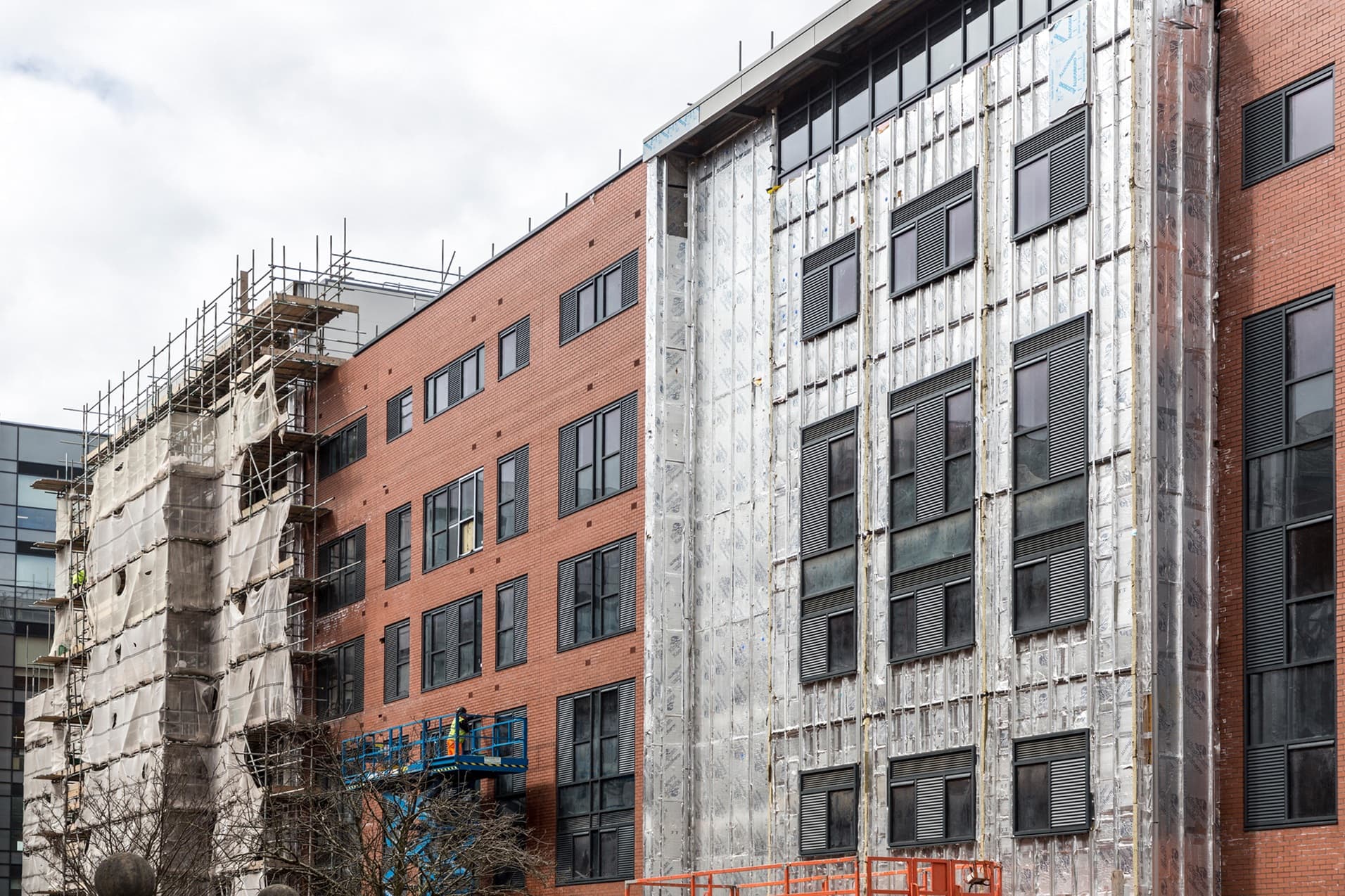
Fire Safety and Building Fabric Risk Assessments. Fire safety does not begin and end with alarms, sprinklers, and evacuation procedures. The external envelope of a building plays a critical role in controlling fire spread, protecting occupants, maintaining structural performance, and supporting compliance with UK fire safety legislation.
For building owners, landlords, asset managers, housing providers, and responsible persons, understanding the condition and risk profile of the external building fabric has become essential. Failures within façades, roofs, cladding systems, balconies, external walls, cavity barriers, and associated construction elements can significantly increase fire risk exposure and create major legal and financial liabilities.
A Building Fabric Risk Assessment provides a structured evaluation of the condition, performance, and risk associated with the external envelope of a building. While the assessment considers a broad range of building fabric risks, fire safety forms a key component of the evaluation process.
This article explains how Building Fabric Risk Assessments support fire safety management, why the external envelope matters, how defects can affect dutyholder responsibilities, and why proactive assessment of the building fabric has become a critical part of modern building risk management.
What Is a Building Fabric Risk Assessment?
A Building Fabric Risk Assessment is a detailed inspection and risk evaluation of the external elements of a building.
The assessment focuses on the condition, deterioration, defects, construction methods, and performance risks associated with the external envelope, including:
- External walls
- Cladding systems
- Façades
- Roofing systems
- Balconies
- Parapets
- Soffits
- External glazing
- Structural interfaces
- Cavity barriers
- Rainscreen systems
- External insulation systems
- Surface finishes
- Drainage interfaces
- External penetrations and junctions
The purpose of the assessment is to identify risks that could affect:
- Occupant safety
- Building integrity
- Fire safety performance
- Weather resistance
- Structural stability
- Water ingress
- Falling debris hazards
- Long-term asset condition
- Legal compliance
- Maintenance obligations
Fire safety considerations now form a major aspect of external envelope risk management due to increasing regulatory focus on façade construction and fire performance.
Why a Building Fabric Assessment Matters for Fire Safety
The external envelope acts as the protective skin of the building. When external wall systems fail during a fire event, flames and smoke can spread rapidly across elevations and between compartments.
The importance of external wall fire performance has become a major industry focus across the UK built environment sector. Investigations into serious building fires repeatedly identified failures in external wall construction, cavity barriers, combustible materials, and poorly maintained façade systems.
Even relatively minor defects within the external fabric can contribute to increased fire risk, including:
- Missing cavity barriers
- Deteriorated fire breaks
- Combustible cladding materials
- Open service penetrations
- Defective balcony construction
- Inadequate compartmentation interfaces
- Poor refurbishment detailing
- Water ingress damaging fire protection systems
A Building Fabric Risk Assessment helps dutyholders identify these risks before they escalate into serious safety concerns.
The Link Between Building Fabric and Dutyholder Responsibilities
Under UK fire safety legislation, dutyholders have clear obligations to understand and manage building-related fire risks.
Relevant legislation and guidance may include:
- Regulatory Reform (Fire Safety) Order 2005
- Fire Safety Act 2021
- Building Safety Act 2022
- PAS 9980
- Approved Document B
- Higher-Risk Buildings regulations
- Occupiers’ Liability legislation
- Health and safety obligations
These responsibilities increasingly extend beyond internal fire precautions and now place greater emphasis on the external wall construction and building fabric condition.
Dutyholders may include:
- Building owners
- Freeholders
- Managing agents
- Responsible persons
- Housing associations
- Asset managers
- Facilities managers
- Accountable persons under the Building Safety Act
A Building Fabric Risk Assessment supports these responsibilities by providing evidence-based information about the condition and risk profile of the external envelope.
Fire Safety Risks Commonly Identified in External Building Fabric
A Building Fabric Risk Assessment often identifies defects that may directly or indirectly impact fire safety performance.
Defective Cladding Systems
Cladding systems can contain combustible materials, missing fire barriers, poorly installed components, or deteriorated interfaces.
These defects may contribute to rapid external fire spread.
Missing or Inadequate Cavity Barriers
Cavity barriers are designed to restrict concealed fire spread within wall cavities and roof voids.
Assessments frequently identify:
- Missing barriers
- Incorrect installation
- Displaced barriers
- Incomplete fire stopping
- Deteriorated materials
Balcony Fire Risks
Balconies may contain combustible decking, timber structures, or storage risks that increase external fire spread potential.
External Service Penetrations
Poorly sealed penetrations for cables, pipework, or ventilation systems can compromise compartmentation between internal and external elements.
Water Ingress Affecting Fire Performance
Persistent moisture penetration can degrade fire-resistant materials and compromise the long-term effectiveness of cavity barriers and façade systems.
Unsafe Surface Materials
Older refurbishment works may contain materials that no longer meet modern fire performance expectations.
A Building Fabric Risk Assessment identifies these issues systematically and prioritises remediation according to risk severity.
Why Fire Safety Cannot Be Assessed in Isolation
Fire safety risks rarely exist independently from wider building fabric issues.
For example:
- Water ingress may damage cavity barriers
- Structural movement may create façade gaps
- Corroded fixings may destabilise cladding systems
- Roof defects may compromise compartment lines
- Deteriorated sealants may permit smoke spread
- Poor maintenance may expose combustible materials
A fragmented inspection approach can overlook how these issues interact.
A Building Fabric Risk Assessment provides a holistic understanding of the external envelope condition while also considering how defects influence fire safety risk exposure.
External Wall Construction and Fire Spread
Modern external wall systems often contain multiple layers and concealed construction elements.
These may include:
- Insulation
- Ventilated cavities
- Support rails
- Breather membranes
- Fire barriers
- Cladding panels
- Structural framing
- Waterproofing systems
Defects within any layer may affect fire performance.
Fire spread can occur through:
- Ventilated cavities
- Poorly protected openings
- Combustible materials
- Inadequate compartmentation interfaces
- Failed cavity barriers
A Building Fabric Risk Assessment examines the condition and performance of these systems and highlights areas requiring further investigation or remediation.
The Importance of Maintenance and Inspection
Building fabric fire risks often develop gradually over time.
Factors contributing to deterioration include:
- Weather exposure
- Ageing materials
- Poor maintenance
- Uncontrolled alterations
- Inadequate repairs
- Movement and settlement
- Water penetration
- Mechanical damage
Without regular inspection, defects can remain hidden for years.
Routine Building Fabric Risk Assessments support proactive asset management by identifying issues early and allowing planned intervention before defects become major safety risks.
How Building Fabric Risk Assessments Support Compliance
Regulators increasingly expect dutyholders to demonstrate that they understand the condition and fire risks associated with their buildings.
A Building Fabric Risk Assessment supports compliance by:
- Identifying external envelope risks
- Recording defect severity
- Providing photographic evidence
- Supporting maintenance planning
- Prioritising remediation works
- Demonstrating proactive risk management
- Supporting fire risk assessment processes
- Assisting with asset management decisions
The assessment can also support communication between:
- Fire risk assessors
- Building surveyors
- Structural engineers
- Facilities teams
- Asset managers
- Principal accountable persons
- Contractors
- Insurers
This coordinated approach improves overall building safety management.
The Role of PAS 9980 and External Wall Risk Appraisal
PAS 9980 introduced a more structured methodology for assessing fire risk within external wall construction.
Although a Building Fabric Risk Assessment is broader than a PAS 9980 appraisal, the assessment process can help identify conditions that may require further specialist investigation under PAS 9980 principles.
Examples include:
- Uncertain material composition
- Evidence of façade deterioration
- Missing cavity barriers
- High-risk cladding configurations
- Defective fire stopping interfaces
The Building Fabric Risk Assessment therefore acts as an important front-line risk identification tool.
Buildings That Benefit From Building Fabric Risk Assessments
All building types can benefit from external envelope risk assessment, but certain buildings present increased fire safety considerations.
High-Rise Residential Buildings
Tall residential buildings require careful management of façade fire risks due to evacuation complexity and occupancy density.
Social Housing
Housing providers often manage ageing stock with historic refurbishment works and varying construction standards.
Commercial Buildings
Office buildings may contain complex façades and extensive service penetrations.
Education Buildings
Schools and universities frequently contain mixed-age estates with evolving building fabric risks.
Healthcare Buildings
Hospitals and care homes require robust fire safety strategies to protect vulnerable occupants.
Mixed-Use Developments
Mixed occupancy buildings can present complex façade and compartmentation challenges.
Heritage Buildings
Historic structures often require specialist assessment approaches that balance fire safety and conservation requirements.
Common Warning Signs Identified During Assessments
Visible indicators of elevated building fabric fire risk may include:
- Cracked or displaced cladding panels
- Missing façade components
- Water staining
- Failed sealants
- Corrosion
- Structural movement
- Loose balcony finishes
- Damaged soffits
- Open joints
- Exposed insulation
- Deteriorated roof interfaces
These defects may indicate deeper hidden risks within the building envelope.
A professional Building Fabric Risk Assessment investigates these issues in detail and evaluates their wider safety implications.
The Importance of Independent Expertise
External envelope systems are often technically complex and may contain concealed defects that are difficult to identify without specialist knowledge.
Independent assessors provide:
- Objective risk evaluation
- Technical building fabric expertise
- Understanding of façade construction
- Awareness of evolving fire safety guidance
- Risk-based remediation advice
- Prioritised maintenance recommendations
This independent assessment helps dutyholders make informed decisions about building safety and long-term asset management.
Building Fabric Risk Assessments and Long-Term Asset Management
Fire safety forms one part of a much wider building fabric risk management strategy.
A reactive approach to façade defects can lead to:
- Escalating repair costs
- Emergency works
- Insurance concerns
- Regulatory action
- Occupant complaints
- Operational disruption
- Increased liability exposure
By integrating Building Fabric Risk Assessments into planned asset management programmes, organisations can:
- Improve budgeting accuracy
- Prioritise high-risk defects
- Coordinate maintenance activities
- Reduce lifecycle costs
- Improve building resilience
- Support compliance obligations
- Protect occupants and assets
This proactive approach supports safer and more sustainable building management.
The Future of Building Fabric and Fire Safety Risk Management
The relationship between external envelope performance and fire safety will continue to receive increased attention across the UK property sector.
Key trends include:
- Greater regulatory scrutiny
- Stronger accountability requirements
- Increased façade inspections
- More intrusive investigations
- Enhanced digital record keeping
- Higher competency standards
- Closer integration between fire safety and asset management
- Greater focus on preventative maintenance
Dutyholders who adopt proactive Building Fabric Risk Assessment programmes will be better positioned to manage risk, maintain compliance, and protect building occupants.
Conclusion
The external envelope of a building plays a critical role in overall fire safety performance. Defects within façades, cladding systems, balconies, roofs, and cavity barriers can significantly increase the risk of external fire spread and compromise occupant safety.
A Building Fabric Risk Assessment provides a structured evaluation of the condition, performance, and risk profile of the external building fabric while also considering how these issues may affect fire safety responsibilities.
For dutyholders, responsible persons, landlords, housing providers, and asset managers, these assessments provide valuable insight into hidden risks that may otherwise remain unidentified.
As fire safety regulation continues to evolve, proactive management of the external building fabric has become an essential part of responsible building ownership and long-term asset protection.
FAQs - Fire Safety & Building Fabric
What is a Building Fabric Risk Assessment?
A Building Fabric Risk Assessment is a detailed inspection of the external building envelope to identify defects, deterioration, safety risks, maintenance issues, and performance concerns.
How does building fabric affect fire safety?
The external envelope can contribute to fire spread if cladding systems, cavity barriers, balconies, or façade materials fail during a fire event.
Does a Building Fabric Risk Assessment replace a fire risk assessment?
No. A Building Fabric Risk Assessment complements fire risk assessments by focusing specifically on the condition and risks associated with the external building fabric.
What fire safety issues can be identified during a Building Fabric Risk Assessment?
Assessments may identify combustible materials, defective cladding systems, missing cavity barriers, poor fire stopping, balcony risks, and façade deterioration.
Who should commission a Building Fabric Risk Assessment?
Building owners, managing agents, housing associations, landlords, asset managers, and accountable persons should consider commissioning assessments.
Are external wall systems included in the assessment?
Yes. External wall construction forms a major part of a Building Fabric Risk Assessment.
Can water ingress affect fire safety?
Yes. Persistent moisture can damage fire-resistant materials and reduce the effectiveness of cavity barriers and fire stopping systems.
How often should Building Fabric Risk Assessments be carried out?
Assessment frequency depends on building age, condition, occupancy type, maintenance history, and risk profile.
Why are cavity barriers important?
Cavity barriers restrict concealed fire spread within wall cavities and roof voids.
How do Building Fabric Risk Assessments support compliance?
They provide documented evidence of proactive risk management and help dutyholders understand and manage external building safety risks.
Contact
Anstey Horne provides expert Building Fabric Risk Assessments for residential, commercial, mixed-use, and higher-risk buildings across the UK.
Our experienced specialists deliver detailed assessments that help building owners, developers, housing providers, freeholders, and asset managers identify defects, understand risk exposure, support compliance obligations, and plan effective remediation and maintenance strategies.
Whether you require a BFRA as part of a building safety review, planned maintenance programme, refurbishment project, due diligence exercise, or asset management strategy, our team can provide clear, practical, and technically robust advice tailored to your building and operational requirements.
Our assessments can include:
- External wall and facade inspections
- Cladding and compartmentation reviews
- Condition and defect surveys
- Water ingress investigations
- Fire safety-related fabric assessments
- Lifecycle and maintenance planning support
- Risk prioritisation and remediation recommendations
- Multidisciplinary technical consultancy services
To discuss your requirements or commission a BFRA, contact Anstey Horne today. Our team will help you understand the condition, safety, and long-term performance of your building assets.
To arrange a no-obligation consultation – please call 020 4534 3130.
If you rather we called you, or for further information please fill in our contact form and we will be in touch.
For more information on all aspects of this service see the collection of articles in our blog.
To discuss Building Fabric Risk Assessments please call 020 4534 3130.
For further information, please contact :

Paul Phillips
BSc (Hons) MRICS C.BuildE MCABE
Senior Director
Building Surveying
London

Alex Hayward
MSc MRICS
Director
Building Surveying
London

Will Mantell-Sayer
BSc (Hons) MRICS
Associate Director
Building Surveying
Norwich