EWS1 Nottingham
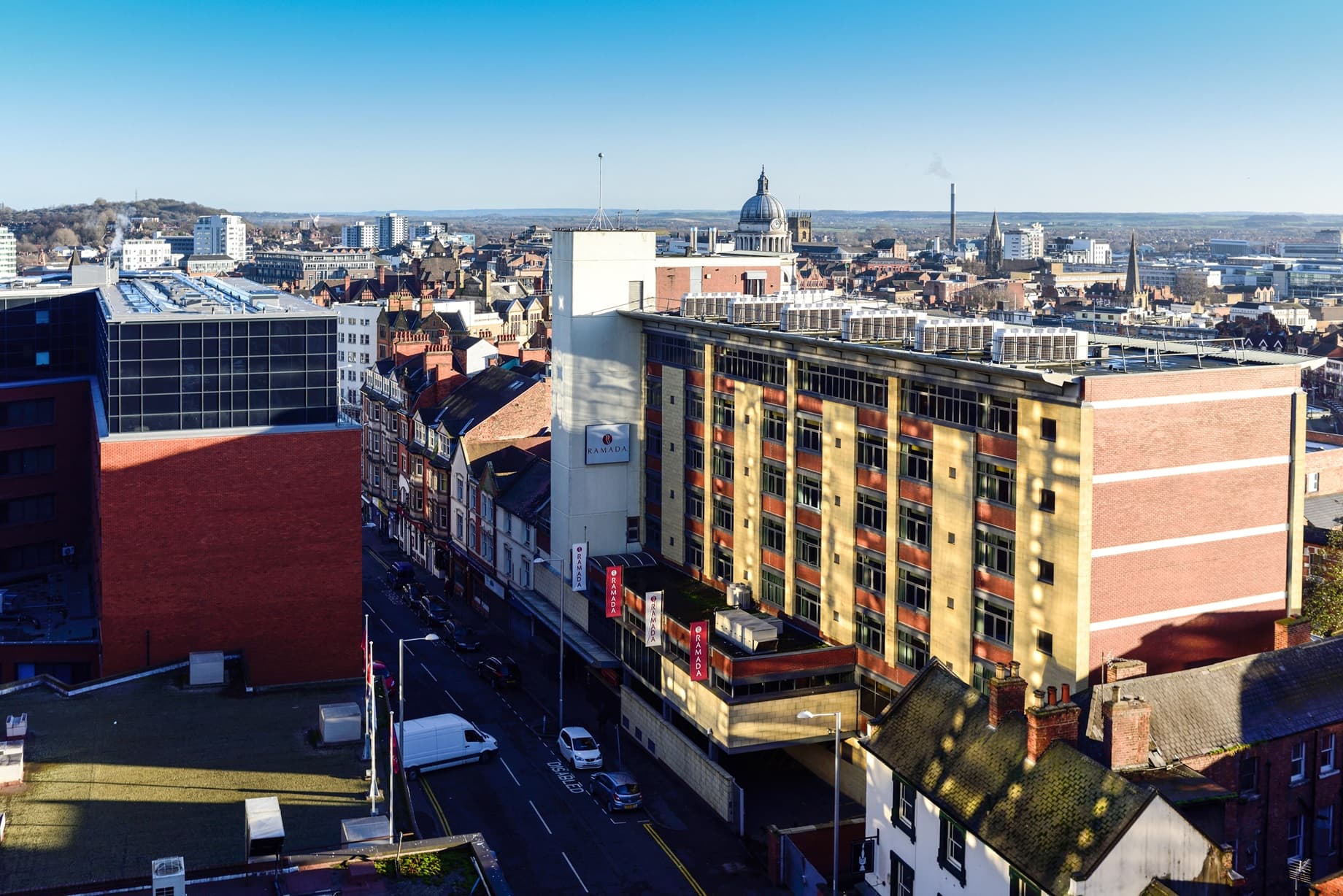
EWS1 Nottingham sits at the centre of the post-Grenfell property market for flats across the city and wider Nottinghamshire. If you own, manage, sell, buy, or lend against a flat in Nottingham, you will almost certainly encounter the EWS1 process. Mortgage lenders, valuers, managing agents, and leaseholders now treat the EWS1 form as a critical gateway document. Without it, transactions stall, refinancing fails, and buildings remain effectively frozen in the market.
This guide explains EWS1 Nottingham in practical terms. You will learn when an EWS1 form is required, how the assessment works, what lenders expect, how long the process takes, and how Anstey Horne delivers EWS1 assessments across Nottingham with clarity and control. The focus is on real buildings, real decisions, and real outcomes.
What EWS1 Nottingham means in practice
An EWS1 form is a standardised External Wall System Fire Review. It allows a competent professional to confirm whether the external wall construction of a residential building presents an unacceptable fire risk. The form exists to support valuation and lending decisions. It does not replace a fire risk assessment, and it does not confirm overall building safety. It deals only with the external wall system and attached elements such as balconies.
In Nottingham, the demand for EWS1 assessments increased rapidly due to the city’s mix of post-war residential blocks, city-centre apartment schemes, student accommodation, and mixed-use developments. Many of these buildings include cladding systems, insulation, render systems, rainscreen façades, or timber balconies that trigger lender concern.
When a lender asks for EWS1 Nottingham, they want certainty. They want to know whether the external walls require remediation or whether the risk remains low enough to lend without conditions. The EWS1 form gives them that structured answer.
Why EWS1 Nottingham requests continue
You may assume that EWS1 only applies to tall buildings. That assumption causes delays. Lenders now request EWS1 forms for buildings under 18 metres where they identify potential risk. Height alone no longer determines whether a form is required.
Common triggers in Nottingham include
- Visible cladding or rainscreen systems
- Timber or composite balconies
- External wall insulation systems
- Student blocks with lightweight façades
- Buildings converted from offices or industrial use
- Refurbishments carried out between 1995 and 2018
If a valuer flags any of these features, the lender will often pause the transaction until an EWS1 form is provided. This applies across Nottingham city centre, Mapperley, The Park, Lenton, West Bridgford, and surrounding areas.
Who needs EWS1 Nottingham
EWS1 Nottingham affects multiple parties at different stages of ownership and occupation.
You need EWS1 Nottingham if you are
- A freeholder or building owner responsible for common parts
- A managing agent acting for a residential block
- A leaseholder trying to sell or remortgage
- A developer dealing with legacy façades
- A housing association managing multi-storey blocks
- A lender or valuer assessing lending risk
If one flat in a block requires an EWS1 form, the entire block usually falls within scope. A single form typically covers a single building or block, not individual flats.
How the EWS1 form works
The EWS1 form follows a fixed structure. The assessor selects either Option A or Option B based on the construction.
Option A applies where the external wall materials are unlikely to support combustion. This route suits traditional masonry construction or modern systems that meet limited combustibility criteria. Option A includes three possible outcomes depending on attachments and risk.
Option B applies where combustible materials exist within the external wall system. This route requires a higher level of fire expertise and involves a judgement on whether the risk remains low or whether remedial works are required.
The form results in one of five possible outcomes. A1, A2, A3, B1, B2. Lenders typically accept A1, A2, and B1 outcomes. A3 and B2 outcomes indicate potential or confirmed remediation.
What EWS1 Nottingham does not do
Many clients misunderstand the purpose of EWS1. Clarity avoids frustration.
EWS1 Nottingham does not
- Replace a Fire Risk Assessment
- Confirm compliance with Building Regulations
- Assess internal compartmentation
- Cover fire doors or escape routes
- Guarantee future insurance terms
The form strictly addresses external walls and attachments. Managing agents must still manage wider fire safety duties separately.
The Nottingham building stock challenge
Nottingham presents specific challenges for EWS1 assessments.
The city includes
- High-rise council and former council blocks
- Private apartment schemes from multiple development cycles
- Large student accommodation portfolios
- Mixed-use developments with podium decks
- Regenerated industrial conversions
Many schemes pre-date modern fire guidance or include hybrid façades installed during refurbishment. Documentation often remains incomplete or fragmented. This reality makes professional investigation essential.
How Anstey Horne delivers EWS1 Nottingham
Anstey Horne approaches EWS1 Nottingham as a managed technical process, not a tick-box exercise. The objective is to reach a defensible, lender-ready outcome while avoiding unnecessary delay or cost.
You receive a structured service that includes
- Initial desktop review of available information
- Review of drawings, specifications, and O&M manuals
- Risk-based inspection strategy
- Intrusive inspection planning where required
- Coordination with managing agents and residents
- Clear reporting aligned with PAS 9980 principles
- Formal completion of the EWS1 form
The process adapts to the building. We avoid blanket assumptions. We focus on evidence.
Desktop review stage
The first step in EWS1 Nottingham involves information gathering. This stage often determines whether intrusive inspection is required.
We review
- As-built drawings and elevations
- Planning and building control records
- Cladding specifications
- Fire strategy reports where available
- Previous surveys or FRAEW reports
If the information demonstrates limited combustibility with confidence, the assessment may proceed efficiently. Where gaps exist, we identify them early.
Site inspection stage
A physical inspection follows. The inspection scope reflects the building’s complexity and risk profile.
Typical inspection activities include
- Visual review of external elevations
- Identification of cladding types and interfaces
- Review of balcony construction
- Assessment of fire stopping visibility
- Photographic recording
Where necessary, we recommend intrusive inspection. This may involve opening up sections of the façade to confirm materials and cavity barriers. We plan this carefully to minimise disruption.
Intrusive inspection and PAS 9980 alignment
Where combustible materials may exist, PAS 9980 principles guide the assessment. This approach considers risk holistically rather than relying on blanket assumptions.
Factors considered include
- Material combustibility
- Configuration and fixing
- Cavity barrier provision
- Fire spread pathways
- Occupancy type
- Mitigation measures
This structured approach often avoids unnecessary remediation while maintaining life safety priorities.
Timescales for EWS1 Nottingham
Timescales depend on building complexity and access.
As a general guide
- Desktop review. One week
- Site inspection. One day to one week depending on size
- Intrusive inspection. Dependent on contractor availability
- Reporting and form completion. Two to three weeks
Early engagement reduces delays. Buildings that wait until a sale collapses often face longer lead times.
Common EWS1 Nottingham pitfalls
You avoid delay by understanding common mistakes.
Typical pitfalls include
- Appointing assessors without correct competence
- Incomplete building information
- Late engagement with residents
- Unplanned intrusive works
- Expecting EWS1 to solve all fire safety issues
An experienced consultant manages these risks proactively.
Competence and signing the EWS1 form
Only suitably competent professionals may sign EWS1 forms. The required competence depends on whether the assessment falls under Option A or Option B.
Anstey Horne ensures that
- The assessor meets the required professional standards
- Fire engineering input is used where required
- The form remains valid and defensible
This protects building owners, managing agents, and leaseholders from rejected forms.
How EWS1 Nottingham supports transactions
A completed EWS1 form unlocks stalled transactions.
It allows
- Mortgage offers to proceed
- Valuations to complete
- Sales to exchange
- Remortgages to complete
- Portfolio refinancing to progress
For managing agents, it also reduces repetitive lender queries and resident complaints.
EWS1 Nottingham and remediation strategy
Where remediation is required, the EWS1 outcome informs next steps.
A B2 or A3 result does not mean immediate works must begin. It means the risk requires management. That may involve further design, funding applications, or interim measures. Early clarity supports better decision-making.
Why early EWS1 Nottingham advice matters
Engaging early saves cost and time.
You benefit from
- Early risk identification
- Clear scope definition
- Realistic programme planning
- Better resident communication
- Reduced transaction fallout
Waiting until a sale collapses almost always increases pressure and expense.
FAQs - EWS1 Nottingham
Is EWS1 Nottingham legally required
No. The EWS1 form is not a legal requirement. Lenders and valuers request it as part of their risk assessment.
Does every building in Nottingham need an EWS1 form
No. Only buildings where lenders identify potential external wall risk require a form. Height alone does not determine this.
How long is an EWS1 form valid
An EWS1 form remains valid for five years unless the external wall system changes.
Can leaseholders commission EWS1 Nottingham themselves
Usually no. The building owner or managing agent commissions the assessment for the whole block.
Does EWS1 replace a fire risk assessment
No. EWS1 covers only external walls. You still need a suitable and sufficient fire risk assessment.
Will an EWS1 form guarantee a mortgage
No. It supports lending decisions but does not guarantee lender approval.
What happens if remediation is required
The outcome informs a wider strategy. This may include design, funding, or interim risk management.
Can EWS1 Nottingham cover multiple blocks
No. Each block requires its own form unless buildings are structurally identical and assessed together.
Why choose Anstey Horne for EWS1 Nottingham
You need certainty, competence, and control. Anstey Horne provides structured EWS1 Nottingham services grounded in technical evidence and practical delivery. The focus remains on unlocking transactions, managing risk, and giving you clarity in a complex market.
If you manage or own a residential building in Nottingham and need clear advice on EWS1, early engagement makes the difference between progress and paralysis.
Contact Us
For more information or to commission an EWS1 get in touch with us today. To arrange a no-obligation consultation - please call 020 4534 3130.
If you'd rather we called you, or for further information on EWS1 forms and FRAEW Surveys please fill in our contact form and we will be in touch.
For further information on all aspects of this service see the collection of articles in our blog.
To commission an EWS1 or FRAEW please call 020 4534 3130.
For further information on Fire Risk Assessment, Retrospective Fire Strategies, FRAEWs or advice in respect of your obligations as a building owner, developer or manager, please contact :

Sarah Taylor
Business Support Manager
Building Surveying
London

Thomas Mead-Herbert
BSc (Hons) MRICS C.BuildE MCABE ABBE L6 EWSA
Senior Director
Building Surveying
London

Charlie Powell
BSc (Hons) MRICS
Director
Building Surveying
Manchester