What is Awaab’s Law? Updated Guide for Social and Private Landlords
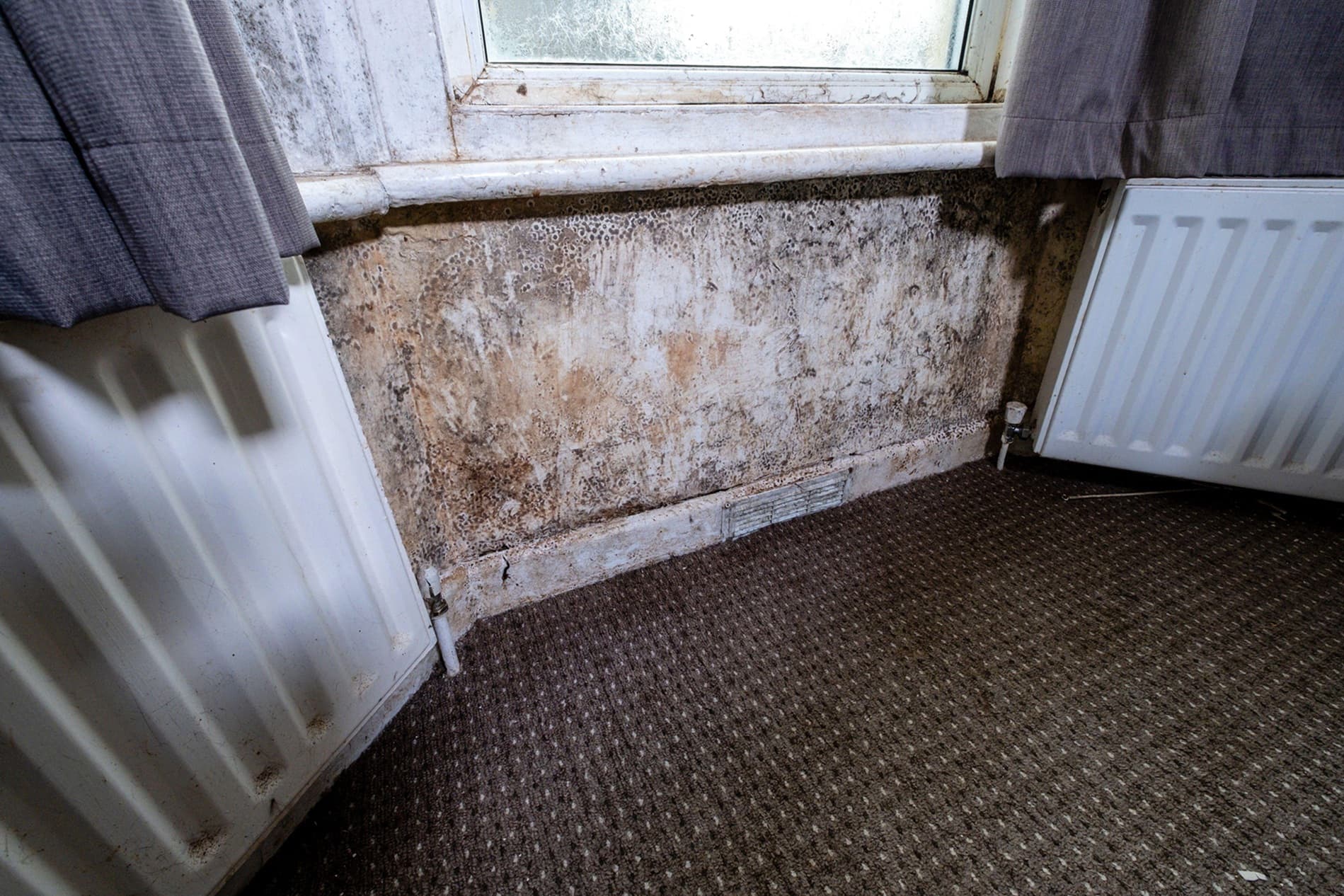
Awaab’s Law is a major reform to housing regulation in England that introduces strict legal duties requiring landlords to investigate and repair dangerous housing conditions within fixed statutory timescales.
The law was introduced following the death of two-year-old Awaab Ishak after prolonged exposure to severe damp and mould in a social housing property. Government investigations found repeated complaints about the conditions had not been addressed appropriately.
Since then, the legal framework governing housing conditions has expanded significantly through:
- The Social Housing (Regulation) Act 2023
- The Hazards in Social Housing (Prescribed Requirements) (England) Regulations 2025
- The Housing Act 2004
- The Housing Health and Safety Rating System (HHSRS)
- The Renters’ Rights Act 2025
The position has now evolved beyond social housing alone. The Renters’ Rights Act 2025 creates powers to extend key housing standards and enforcement mechanisms into the private rented sector, including potential future application of Awaab’s Law style requirements.
This updated guide explains:
- What Awaab’s Law is
- Which landlords are affected
- The statutory repair deadlines
- How the Housing Act 2004 and HHSRS interact with the law
- How the Renters’ Rights Act changes the position for private landlords
- Why private landlords should prepare now
What is Awaab’s Law?
Awaab’s Law introduces legally enforceable deadlines requiring social landlords to investigate and remedy dangerous housing hazards within fixed periods.
The legal framework is implemented through amendments introduced by the Social Housing (Regulation) Act 2023 and supporting regulations.
The law applies to:
- Local authorities
- Housing associations
- Registered providers of social housing
The first implementation phase began on 27 October 2025.
Unlike earlier housing legislation, Awaab’s Law creates mandatory response deadlines rather than relying solely on general repairing obligations.
Why was Awaab’s Law introduced?
The legislation was introduced because existing housing enforcement systems often failed to ensure timely repairs where tenants faced dangerous living conditions.
Although landlords already owed obligations under legislation including:
- The Housing Act 2004
- The Landlord and Tenant Act 1985
- The Homes (Fitness for Human Habitation) Act 2018
many tenants still experienced prolonged exposure to mould, damp, cold and unsafe housing conditions.
The Housing Act 2004 already gave local authorities powers to assess housing hazards and take enforcement action where Category 1 or Category 2 hazards existed.
Under section 5 of the Housing Act 2004, local authorities must take enforcement action where a Category 1 hazard exists.
However, enforcement action could still be slow and inconsistent.
Awaab’s Law therefore introduced:
- Mandatory investigation periods
- Mandatory repair deadlines
- Emergency response obligations
- Written communication requirements
- Stronger regulatory accountability
What hazards are covered?
Awaab’s Law is closely linked to the Housing Health and Safety Rating System (HHSRS), which forms the statutory framework for assessing housing hazards under the Housing Act 2004.
The HHSRS identifies 29 housing hazard categories including:
- Damp and mould growth
- Excess cold
- Excess heat
- Fire hazards
- Electrical hazards
- Structural collapse
- Falls
- Carbon monoxide exposure
- Hygiene hazards
- Water supply issues
The Housing Act 2004 defines a hazard as any risk of harm to the health or safety of an occupier arising from a property defect, lack of maintenance or related deficiency.
The legislation also confirms that “health” includes mental health.
What are Category 1 and Category 2 hazards?
The Housing Act 2004 classifies hazards into:
- Category 1 hazards
- Category 2 hazards
Category 1 hazards are the most serious and require enforcement action by local authorities.
Category 2 hazards are less severe but may still justify enforcement action.
The seriousness of a hazard is assessed by considering:
- Likelihood of harm occurring
- Severity of injury or illness
- Vulnerability of occupants
What are the legal repair deadlines under Awaab’s Law?
The regulations create strict timescales for responding to hazards.
Emergency hazards
Where there is an imminent and significant risk to health or safety, landlords must:
- Investigate within 24 hours
- Carry out emergency safety works within 24 hours
Examples may include:
- Severe electrical risks
- Dangerous mould affecting vulnerable children
- Structural instability
- Major leaks
- Serious fire safety defects
Significant hazards
Where hazards present a serious but non-immediate risk, landlords must:
- Investigate within 10 working days
- Provide written findings within 3 working days
- Begin repair works within 5 working days after investigation
Preventative works
Landlords must also carry out preventative works to stop hazards recurring.
Where possible, these works must begin within 5 working days or otherwise within 12 weeks.
Does Awaab’s Law only cover damp and mould?
No.
Damp and mould form the first implementation phase because of the circumstances surrounding Awaab Ishak’s death.
However, the law is expanding in stages.
Phase 1 - October 2025
Covers:
- Damp and mould
- Emergency hazards
Phase 2 - 2026
Expands to include:
- Excess cold
- Excess heat
- Fire hazards
- Electrical hazards
- Falls
- Structural hazards
Phase 3 - 2027
Will cover almost all remaining HHSRS hazards except overcrowding.
How does the Housing Act 2004 support enforcement?
The Housing Act 2004 remains the central enforcement framework for unsafe housing conditions.
Local authorities have duties to:
- Review housing conditions in their district
- Inspect properties where hazards may exist
- Take enforcement action for Category 1 hazards
The Act allows authorities to issue:
- Improvement notices
- Prohibition orders
- Hazard awareness notices
- Emergency remedial action
- Emergency prohibition orders
Improvement notices
Under sections 11 and 12 of the Housing Act 2004, local authorities can require landlords to carry out remedial works where Category 1 or Category 2 hazards exist.
Improvement notices must specify:
- The nature of the hazard
- The deficiency causing the hazard
- The remedial action required
- Timescales for starting and completing works
Prohibition orders
Where hazards are sufficiently serious, local authorities may prohibit occupation or use of part or all of a property.
This can apply to:
- Entire dwellings
- HMOs
- Flats
- Common parts
How does the Renters’ Rights Act affect private landlords?
The Renters’ Rights Act 2025 significantly expands regulation of the private rented sector.
Importantly, the legislation inserts new provisions into the Housing Act 2004 allowing the Secretary of State to create enforceable housing standards for qualifying residential premises in the private rented sector.
The Act also introduces powers to extend Awaab’s Law style requirements into private rented housing.
This represents a major shift in private landlord obligations.
Will Awaab’s Law apply to private landlords?
The government has confirmed that powers now exist to extend Awaab’s Law to the private rented sector, although implementation details are still being developed.
The Renters’ Rights Act acknowledges that private landlords differ from social landlords because many own smaller property portfolios.
However, the direction of travel is clear.
Private landlords are expected to become subject to:
- Mandatory hazard investigation timescales
- Fixed repair deadlines
- Increased enforcement powers
- Financial penalties for non-compliance
What is the Decent Homes Standard?
The Decent Homes Standard (DHS) sets minimum standards for rented housing.
Originally developed for social housing, the government has now confirmed that a revised DHS will apply to the private rented sector by 2035 at the latest.
Under the revised standard, properties will need to:
- Be free from Category 1 hazards
- Remain in reasonable repair
- Provide adequate facilities and services
- Deliver reasonable thermal comfort
- Be free from significant damp and mould
This creates substantial overlap between:
- Awaab’s Law
- HHSRS enforcement
- The Housing Act 2004
- The Renters’ Rights Act
- The Decent Homes Standard
Why private landlords should prepare now
Although some reforms will not fully apply until later phases, the regulatory direction is already established.
Approximately 21% of privately rented homes currently fail the Decent Homes Standard and around one in eight contain at least one Category 1 hazard.
Private landlords should therefore begin preparing now by:
- Reviewing stock condition
- Investigating damp and mould properly
- Improving insulation and ventilation
- Maintaining heating systems
- Responding rapidly to tenant complaints
- Keeping accurate repair records
- Undertaking HHSRS assessments where appropriate
Can landlords still blame tenants for mould?
Government guidance strongly discourages landlords from automatically blaming “tenant lifestyle” for mould problems.
Activities such as:
- Cooking
- Bathing
- Washing
- Drying clothes
naturally generate moisture.
Landlords are expected to investigate:
- Ventilation adequacy
- Heating provision
- Insulation deficiencies
- Structural damp
- Building defects
This represents a major cultural and legal shift in housing management.
What does this mean for surveyors and consultants?
The reforms are likely to increase demand for:
- Housing disrepair surveys
- Damp and mould investigations
- HHSRS assessments
- Building pathology inspections
- Expert witness reports
- Compliance audits
- Stock condition surveys
Surveyors now play a critical role in helping landlords demonstrate compliance with increasingly complex housing legislation.
FAQs - What is Awaabs Law
What is Awaab’s Law?
Awaab’s Law requires landlords to investigate and repair dangerous housing hazards within fixed legal timescales.
Does Awaab’s Law currently apply to private landlords?
Not directly yet, but the Renters’ Rights Act creates powers to extend similar requirements into the private rented sector.
What is the HHSRS?
The Housing Health and Safety Rating System is the statutory method used to assess housing hazards under the Housing Act 2004.
What is a Category 1 hazard?
A Category 1 hazard is a serious housing hazard requiring enforcement action by local authorities.
What enforcement powers do councils have?
Local authorities can issue improvement notices, prohibition orders and emergency remedial notices under the Housing Act 2004.
What is the Decent Homes Standard?
The Decent Homes Standard sets minimum standards for housing condition, repair, facilities and thermal comfort.
Will the Decent Homes Standard apply to private rented homes?
Yes. The government has confirmed a revised version will extend to the private rented sector by 2035 at the latest.
What hazards are included under Awaab’s Law?
The law will eventually cover almost all HHSRS hazards including mould, damp, fire risks, electrical hazards and structural dangers.
Conclusion
Awaab’s Law represents one of the most important changes to housing regulation in England in recent decades.
The legislation creates mandatory deadlines for investigating and repairing dangerous housing conditions and significantly strengthens landlord accountability.
At the same time, the Renters’ Rights Act 2025 expands the regulatory framework for private landlords and creates powers to extend similar protections into the private rented sector.
Combined with the Housing Act 2004, HHSRS enforcement and the future Decent Homes Standard, the overall direction is clear:
Landlords across both the social and private rented sectors are now expected to maintain safer, healthier and more responsive housing standards, with far greater legal consequences for failing to do so.
Contact
For expert Housing Disrepair Surveys, technical inspections and litigation support, Anstey Horne provides clear, professional and evidence-based advice across the UK.
To arrange a no-obligation consultation – please call 020 4534 3130.
If you rather we called you, or for further information please fill in our contact form and we will be in touch.
For more information on all aspects of this service see the collection of articles in our blog.
To discuss Housing Disrepair Surveys please call 020 4534 3130.
For further information, please contact :

Paul Phillips
BSc (Hons) MRICS C.BuildE MCABE
Senior Director
Building Surveying
London

Jonathan Rees-Davies
BSc MSc MRICS
Associate Director
Building Surveying
London