FRAEW Nottingham
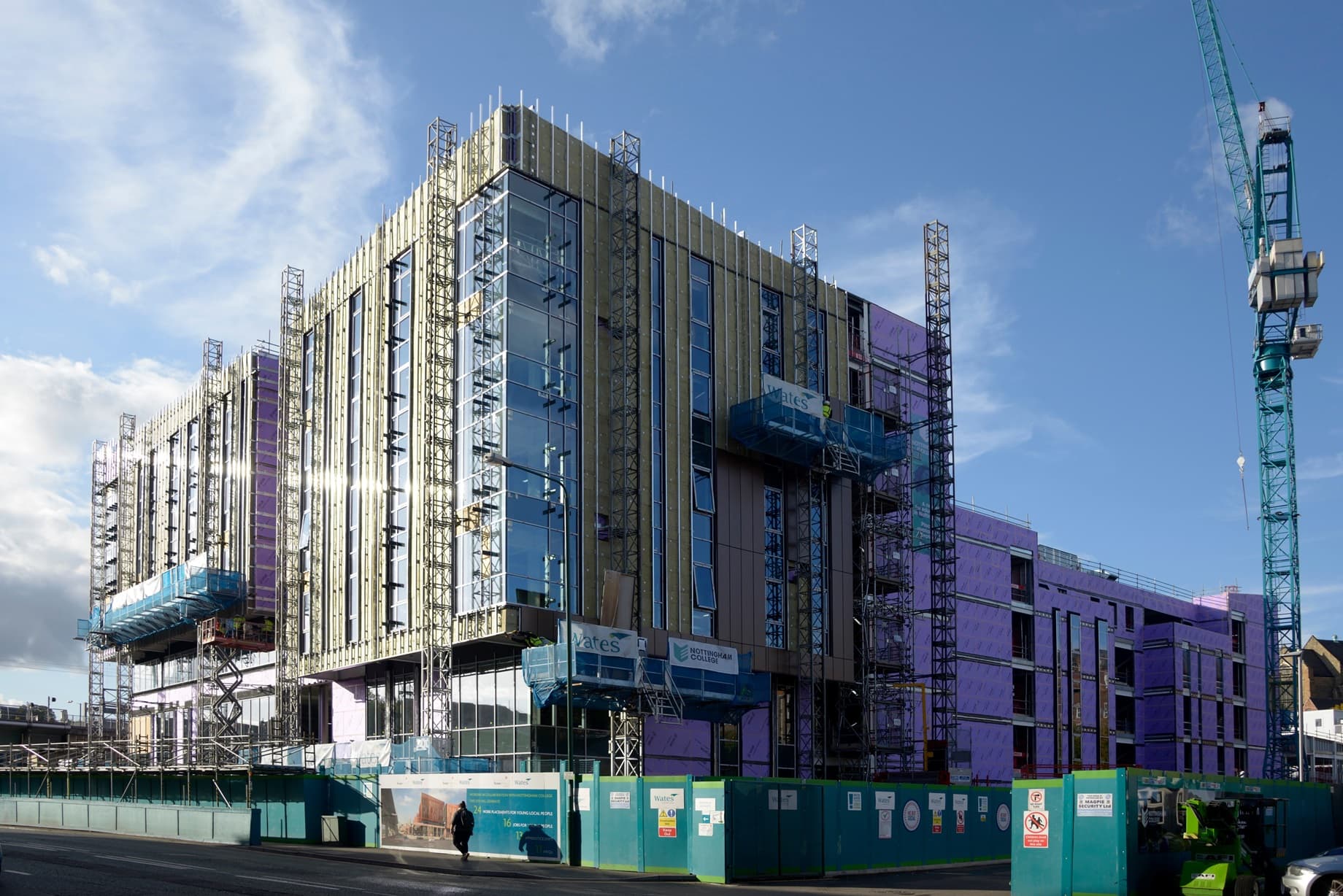
If you need a FRAEW Nottingham assessment, you likely face one of three pressures. A lender needs reassurance before they will progress a sale or remortgage. Your team needs a PAS 9980 aligned appraisal to decide whether remediation makes sense. Or you need a defensible evidence trail for governance, residents, and stakeholders.
Anstey Horne delivers FRAEW assessments in Nottingham that give you clarity you can act on. We focus on the external wall system, balconies, and attachments that can drive external fire spread. We verify construction where it matters, explain risk in plain English, and set out proportionate next steps.
What a FRAEW assessment is
A FRAEW assessment is a Fire Risk Appraisal of External Walls. It appraises how your external wall construction behaves as a system on your building. It looks beyond surface materials and considers cavity configuration, insulation position, cavity barriers, fire stopping, interfaces around openings, and features such as balconies that can create rapid external fire spread pathways.
A FRAEW assessment does not replace your full building fire risk assessment. It supports external wall risk decisions. You use it to manage risk, plan further investigation, justify interim measures, or define remediation strategy.
When you need a FRAEW Nottingham assessment
You usually need a FRAEW Nottingham report when uncertainty around the façade creates delay, cost, or risk.
Mortgage and transaction delays
Lenders and valuers often request an external wall appraisal when they see cladding, rainscreen systems, insulated render, timber balconies, spandrel panels, or incomplete records. A clear FRAEW report helps you answer questions quickly and progress the transaction.
Remediation planning and funding decisions
You need an evidence-led basis to decide what to do next. A good appraisal helps you avoid unnecessary remediation. It also helps you avoid delay where risk demands action.
Refurbishment and retrofit changes
External insulation upgrades, window replacements, balcony refurbishments, or partial recladding can change external wall fire behaviour. A FRAEW assessment clarifies the current risk position and the controls you need.
Gaps in as-built information
As-built information often differs from what exists on site. Product substitutions, value engineering, and later works can change critical details. A FRAEW assessment verifies what exists and states clearly what remains unconfirmed.
Governance and stakeholder confidence
If you manage residential buildings, you need a clear evidence trail and a practical plan. A good FRAEW report supports board decisions and gives you a consistent foundation for resident communication.
Nottingham buildings that commonly benefit from a FRAEW appraisal
Nottingham includes a wide mix of residential and mixed-use building types. You often see external wall complexity across:
- Purpose-built blocks of flats with balconies and mixed façade zones
- Student accommodation with higher occupant density and managed operations
- Mixed-use buildings where commercial uses and attachments change ignition and spread pathways
- Refurbished or reclad buildings where records do not match what exists
- Converted buildings with non-standard construction and concealed voids
If your building includes multiple façade systems, uncertain cavity barrier provision, combustible balcony features, or incomplete records, you often benefit from a structured external wall appraisal.
What a FRAEW assessment covers
Our FRAEW Nottingham assessments focus on what drives outcomes in real buildings.
External wall build-ups by elevation and zone
We identify outer surface materials, insulation type and location, sheathing, membranes, fixings, support systems, and cavity configuration.
Cavity barriers and fire stopping where they matter
We check continuity at compartment lines, around openings, and at transitions between façade systems. These details often decide the risk position.
Balconies and terraces
We assess balcony decking, soffits, privacy screens, and build-ups that can enable external fire spread across elevations.
Openings and interfaces
We focus on window heads, jambs, spandrel areas, infill panels, cavity closures, and fire stopping at the façade line.
Attachments and ancillary features
We review features that can increase ignition likelihood or create new fire pathways. This can include canopies, meter boxes, plant enclosures, signage, and service routes at the building perimeter.
Condition and defects
We consider whether deterioration, water ingress, delamination, or missing seals could change façade behaviour and compromise barrier performance.
What you receive from an Anstey Horne FRAEW Nottingham report
You need a deliverable that supports decisions and stands up to stakeholder scrutiny. We structure reports so both technical reviewers and decision-makers can use them.
A clear executive summary
We set out the main findings, the key risk drivers, and the practical implications. We also make clear what you can do now.
A façade description you can audit
We break down the building by elevation and zone. We describe what we observed and what we confirmed through records so you can trace conclusions.
An evidence-led approach
We document what we reviewed, what we inspected, and where we found uncertainty. We support conclusions with a clear evidence trail.
A transparent view of limitations
Where we cannot confirm a detail, we say so. We explain why it matters and what you can do to remove the uncertainty.
Prioritised recommendations
We provide staged recommendations that reduce risk quickly and support longer-term planning. We separate immediate risk controls from further verification and remediation options.
Options where more than one route exists
Many buildings allow more than one proportionate route. We set out options and trade-offs so you can choose a path that fits risk, programme, and budget.
How we deliver FRAEW assessments in Nottingham
You get the best outcome when you follow a structured process that targets uncertainty and controls disruption. We use a staged workflow that keeps the appraisal focused and proportionate.
Stage 1. Desktop review and scope definition
We start with a desktop review to understand your building and your objectives typically within a week. This can often be achieved when you provide a complete document pack at the start.
We review drawings, façade details, fire strategy information, O&M manuals, and any refurbishment records. We then define the scope, identify façade zones, and plan the inspection around the highest risk and highest uncertainty areas.
Stage 2. Inspection planning
We design an inspection plan that targets the details that change decisions. We focus on:
- Façade type transitions and interfaces
- Balconies and potential combustibility pathways
- Window and spandrel details
- Cavity closure at openings
- Roof edge and parapet details
- Areas with missing, conflicting, or unreliable records
Stage 3. Site inspection and verification
We attend site to verify key construction details, record observations, and build a reliable photographic record. We focus on system behaviour and the interfaces that typically drive external fire spread risk.
Stage 4. Intrusive inspection where it changes decisions
Some buildings need targeted openings to confirm build-ups and cavity barrier continuity. Others do not. We recommend intrusive inspection when it materially reduces uncertainty and improves your ability to make proportionate decisions.
You asked us to assume a three-week intrusive site inspection stage where intrusive works are required. This typically reflects planning, access coordination, resident liaison where necessary, permits, safe systems of work, and making good.
Stage 5. Reporting and action planning
We produce a structured report that supports immediate decision-making. We describe the façade systems, set out evidence and limitations, explain risk drivers, and provide prioritised next steps.
Stage 6. Follow-on support
You often need support after the report lands. We help you respond to stakeholder questions and turn recommendations into practical next steps, such as reviewing remediation proposals or supporting briefings with project teams.
How we build fees without fixed price ranges
Fees depend on the work required to reach a robust conclusion for your specific building. We build fees transparently around the main drivers.
Complexity and façade diversity
A building with multiple systems, complex geometry, and extensive balconies will require more inspection and analysis than a simple elevation with a single build-up.
Quality of existing records
Good as-built information reduces uncertainty and can reduce the need for intrusive verification. Poor records increase verification effort.
Access and logistics
Access constraints affect planning time, site time, and coordination effort.
Level of verification required
Some instructions require deeper verification, especially where stakeholders need a stronger evidence trail to move forward.
Intrusive inspection scope
If targeted openings are needed, the number and location of openings and making-good requirements affect the level of input.
Stakeholder support needs
Some clients need structured support for lender queries, resident communication, or design team coordination after the report.
If you want to control fees, you can usually do it by providing a complete document pack upfront, agreeing access arrangements early, and clarifying which decisions the report must support.
What you can do now to speed things up
You can reduce programme risk and improve the quality of the outcome with a few practical steps.
- Gather your documents into a single pack
Include drawings, façade details, fire strategy extracts, and refurbishment records. - List known façade changes
Note window replacements, insulation upgrades, balcony works, partial recladding, and repairs. - Confirm access routes
Identify roof access, balcony access, and any restrictions for inspection. - Plan communications if residents need to provide access
Clear communication reduces delays and refusals.
FAQs : FRAEW Nottingham
How long does a FRAEW Nottingham assessment take?
Programme depends on complexity and access. As a guide, you can often complete the desktop review in one week. Where intrusive inspection is required, allow around three weeks for intrusive site inspection activity and coordination.
Do you always need intrusive inspection?
No. Some buildings allow robust conclusions through strong records and visual verification. We recommend targeted openings when they remove uncertainty that would otherwise block decisions.
Can a FRAEW report help with a mortgage or sale?
It can, when it provides building-specific findings, a clear evidence trail, and a practical plan that addresses key risk drivers.
What documents should you provide at the start?
Provide architectural drawings, façade details and specifications, O&M information, refurbishment records, and any previous external wall reports.
Contact FRAEW Nottingham
If you need a FRAEW Nottingham assessment that gives you clear decisions and practical next steps, give us a call. We deliver evidence-led PAS 9980 aligned external wall appraisals and structured reporting that helps you move forward with confidence.
At Anstey Horne, our expert team of fire engineers and surveyors deliver independent, proportionate, and fully compliant FRAEW Surveys.
Commission a PAS 9980-aligned FRAEW first to set your safety strategy, and let that evidence support any EWS1 a lender requests. You’ll cut duplication, reduce resident disruption, and make faster, better-defended decisions.
Get in touch with us today to arrange a no-obligation consultation - please call 020 4534 3130.
If you'd rather we called you, or for further information on FRAEW Surveys please fill in our contact form and we will be in touch.
For further information on all aspects of this service see the collection of articles in our blog.
To commission an FRAEW please call 020 4534 3130.
For further information on Fire Risk Assessment, Retrospective Fire Strategies, FRAEWs or advice in respect of your obligations as a building owner, developer or manager, please contact :

Sarah Taylor
Business Support Manager
Building Surveying
London

Thomas Mead-Herbert
BSc (Hons) MRICS C.BuildE MCABE ABBE L6 EWSA
Senior Director
Building Surveying
London