EWS1 Manchester
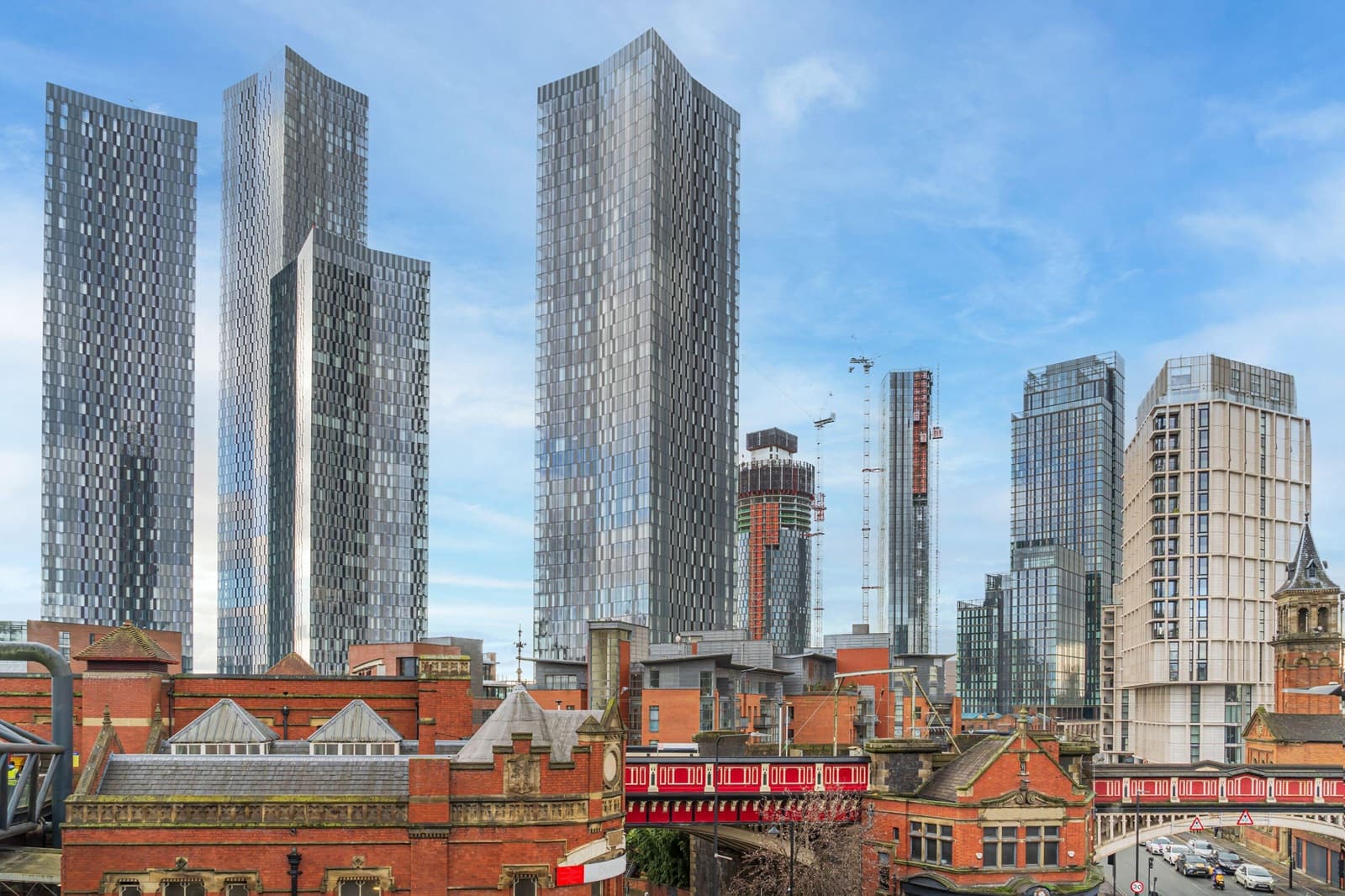
If you own, manage, or have an interest in a residential building in Manchester, you will already know how often lenders, valuers, and solicitors now ask for an EWS1 form. EWS1 Manchester assessments sit at the centre of sales, remortgages, staircasing, and portfolio refinancing across the city. Without a valid form, transactions stall. With the wrong scope or the wrong assessor, risk increases rather than reduces.
This guide explains what EWS1 Manchester means in practice, when you actually need an EWS1 form, how the assessment process works, and how Anstey Horne delivers EWS1 Manchester instructions in a structured, proportionate, and lender-ready way. The focus is practical. You will understand what the form covers, what it does not cover, how ratings work, and how to avoid common delays and disputes.
What an EWS1 form is and why it matters in Manchester
An EWS1 form is a standardised statement used by lenders and valuers to confirm that a building’s external wall system has undergone a professional fire risk appraisal. The form exists to answer one narrow question. Does the external wall construction present a fire safety risk that is likely to require remediation?
The form applies to buildings containing flats. It does not act as a fire safety certificate. Nor does it confirm overall compliance with fire legislation. It focuses only on the external wall system and attachments such as balconies.
In Manchester, the need for EWS1 forms accelerated rapidly following the growth of high-density residential towers, mixed-use regeneration schemes, and complex façade systems. Aluminium composite material, high-pressure laminates, insulated render systems, rainscreen cladding, timber balconies, and composite decking all feature across the city’s housing stock.
Lenders now routinely request an EWS1 Manchester form even for buildings below 18 metres where they perceive potential risk. Without one, leaseholders can find themselves unable to sell or remortgage despite no actual remediation requirement.
What the EWS1 Manchester form does and does not cover
The EWS1 form provides a summary conclusion only. It confirms the professional judgement of a competent assessor based on an investigation of the external wall construction.
The form does cover:
- Primary external wall materials such as cladding, insulation, and filler materials
- Attachments including balconies and decorative features
- A proportionate assessment of fire risk linked to those elements
The form does not cover:
- Internal fire precautions
- Fire doors, compartmentation, or means of escape
- Active fire protection systems
- Overall compliance with the Regulatory Reform Fire Safety Order
This distinction matters. Building owners in Manchester often assume that an EWS1 Manchester form replaces other fire safety duties. It does not. You still need a suitable and sufficient fire risk assessment and compliance with wider building safety obligations.
When you need an EWS1 Manchester assessment
You usually need an EWS1 Manchester form when:
- A lender or valuer requests one during a sale or remortgage
- You manage a block with cladding or balconies and want certainty
- You are planning remediation works and need a baseline position
- You are refinancing or restructuring a residential portfolio
You may not need an EWS1 form if:
- The building has no external wall system of concern
- The construction is clearly traditional masonry without attachments
- Lenders confirm in writing that no form is required
In practice, Manchester lenders often apply a cautious approach. Buildings well below 18 metres still attract EWS1 requests due to façade complexity rather than height alone.
Understanding EWS1 ratings and outcomes
The EWS1 Manchester process results in one of five outcomes. These outcomes matter because they directly affect lending decisions.
Option A applies where external wall materials are unlikely to support combustion.
- A1 means there are no combustible materials present in the external wall or attachments.
- A2 means combustible attachments exist, but a risk assessment confirms no remediation is required.
- A3 means attachments may require remedial works.
Option B applies where combustible materials exist in the external wall system itself.
- B1 means combustible materials are present but the fire risk remains sufficiently low.
- B2 means the fire risk is sufficiently high that remedial works are required.
Anstey Horne focuses on evidence-led, proportionate assessment. We do not default to intrusive investigation unless justified. We also do not downplay risk where evidence supports intervention.
How EWS1 Manchester assessments are carried out
A professional EWS1 Manchester assessment follows a structured methodology aligned with PAS 9980 principles.
The process typically includes:
- Desktop review of construction records, drawings, and O&M manuals
- Review of planning history and façade specifications
- Visual inspection of external elevations and attachments
- Targeted intrusive inspection where justified by risk
- Evaluation of materials, cavity barriers, and fire stopping
- Clear reporting aligned with EWS1 outcomes
We design the scope to suit the building. A 1960s brick block in Salford does not need the same level of investigation as a 30-storey glazed tower in the city centre.
Competence and assessor requirements for EWS1 Manchester
Lenders and professional bodies expect EWS1 Manchester forms to be signed by competent professionals with appropriate experience.
For lower-risk buildings, assessors may rely on recognised professional qualifications combined with completion of the RICS EWS Assessment Training Programme. For higher-risk or more complex buildings, Chartered or Incorporated Fire Engineers remain the appropriate signatories.
Anstey Horne ensures that every EWS1 Manchester instruction matches assessor competence to building risk. Our teams include professionals listed as successful completers of the RICS EWS Assessment Training Programme, with experience across residential typologies in Greater Manchester. Where fire engineering input is required, we integrate that expertise into the assessment from the outset.
This approach avoids rejected forms, lender queries, and costly reassessments.
EWS1 Manchester and PAS 9980 alignment
EWS1 Manchester assessments do not exist in isolation. PAS 9980 now provides the recognised framework for assessing fire risk related to external wall systems.
Our EWS1 Manchester methodology aligns with PAS 9980 principles by:
- Focusing on proportionate risk rather than blanket assumptions
- Considering mitigation measures where appropriate
- Avoiding unnecessary remediation where evidence supports low risk
- Clearly documenting assumptions and limitations
This alignment matters. Lenders increasingly expect EWS1 forms to sit alongside PAS 9980-informed reports rather than unsupported opinions.
Common challenges with EWS1 Manchester instructions
Manchester presents several recurring challenges.
Incomplete records. Many developments lack reliable as-built information. We manage this through targeted investigation rather than guesswork.
Mixed-use buildings. Retail podiums, car parks, and residential towers often sit within the same envelope. We scope assessments carefully to avoid confusion.
Balconies. Timber decking and composite materials frequently trigger A3 or B outcomes. Early clarity helps avoid transaction delays.
Multiple stakeholders. Freeholders, managing agents, and leaseholders often hold different priorities. We manage communication clearly to maintain progress.
How Anstey Horne delivers EWS1 services
Anstey Horne approaches EWS1 Manchester as a service, not a commodity. We focus on clarity, proportionate scope, and lender confidence.
You benefit from:
- Clear upfront scoping and fee structure
- Risk-led inspection strategies
- Assessors matched to building complexity
- Reports written for lender and valuer scrutiny
- Support responding to lender or solicitor queries
We also advise on next steps where remediation appears likely. That advice integrates with wider building safety and cost management services so you can plan rather than react.
EWS1 Manchester for managing agents and portfolio owners
If you manage multiple buildings across Manchester, consistency matters. Inconsistent approaches create confusion and expose you to challenge.
We support managing agents by:
- Creating repeatable assessment frameworks
- Prioritising buildings based on transaction risk
- Coordinating access and inspections
- Managing document control and versioning
- Advising on reassessment triggers
This portfolio approach reduces disruption and protects asset value.
Validity and review of EWS1 forms
An EWS1 Manchester form remains valid for five years unless significant changes occur to the external wall system or attachments. Changes that trigger review include:
- Replacement of cladding or insulation
- Addition or alteration of balconies
- Installation of façade-mounted systems
We track validity dates and advise when reassessment becomes necessary. This avoids last-minute surprises during sales or refinancing.
FAQs - EWS1 Manchester
What is an EWS1 Manchester form used for?
You use an EWS1 Manchester form to satisfy lenders and valuers that a building’s external wall system has undergone a professional fire risk appraisal.
Do all Manchester flats need an EWS1 form?
No. You only need a form where lenders or valuers request one. However, many Manchester buildings attract requests due to façade complexity rather than height.
Is EWS1 Manchester the same as a fire risk assessment?
No. An EWS1 form only covers the external wall system. A fire risk assessment covers life safety across the whole building.
Who can sign an EWS1 form?
A competent professional with appropriate qualifications and experience. Higher-risk buildings require Chartered or Incorporated Fire Engineers. Lower-risk buildings may rely on professionals who have completed recognised EWS training.
How long does an EWS1 Manchester assessment take?
Timescales depend on access, complexity, and whether intrusive inspection is required. Straightforward buildings progress faster than complex towers.
What happens if a building receives a B2 rating?
A B2 outcome indicates that remedial works are required. We advise on next steps, including remediation strategy and cost planning.
Can an EWS1 Manchester form be reused for future sales?
Yes. The form remains valid for up to five years unless significant changes occur.
Why choose Anstey Horne for EWS1 Manchester?
You benefit from proportionate assessment, experienced professionals, and reports written to withstand lender scrutiny. We focus on clarity, not unnecessary alarm.
EWS1 Manchester remains a critical issue for residential property across the city. With the right approach, you can secure clarity, protect value, and keep transactions moving. Anstey Horne delivers EWS1 Manchester services that balance safety, evidence, and practicality.
Contact Us
For more information or to commission an EWS1 get in touch with us today. To arrange a no-obligation consultation - please call 020 4534 3130.
If you'd rather we called you, or for further information on EWS1 forms and FRAEW Surveys please fill in our contact form and we will be in touch.
For further information on all aspects of this service see the collection of articles in our blog.
To commission an EWS1 or FRAEW please call 020 4534 3130.
For further information on Fire Risk Assessment, Retrospective Fire Strategies, FRAEWs or advice in respect of your obligations as a building owner, developer or manager, please contact :

Sarah Taylor
Business Support Manager
Building Surveying
London

Thomas Mead-Herbert
BSc (Hons) MRICS C.BuildE MCABE ABBE L6 EWSA
Senior Director
Building Surveying
London

Charlie Powell
BSc (Hons) MRICS
Director
Building Surveying
Manchester